Daily Dog
Meet Pearl  NOW AVAILABLE!
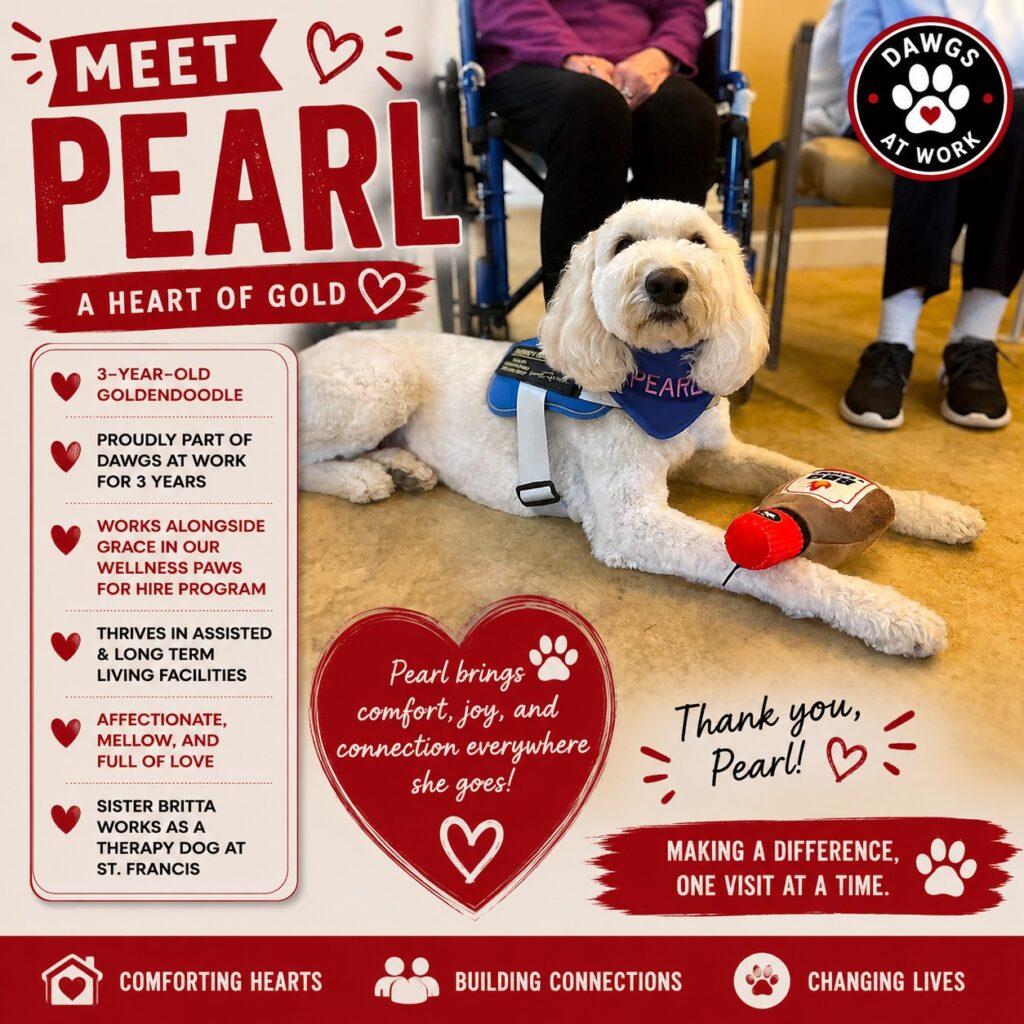
Pearl is a 3-year-old Goldendoodle who has been part of the Dawgs at Work family for the past three years. During that time, she has grown into a wonderful therapy dog with a calm, affectionate personality and a heart full of love for the people she meets. Pearl works alongside Grace in our Wellness Paws for Hire program, where she regularly visits assisted living and long-term care communities. These environments are where Pearl truly shines. Her gentle nature, relaxed demeanor, and genuine love of human connection make her a favorite among residents and staff alike.
Some of you may recognize Pearl’s sister, Britta, who serves as a therapy dog at Ascension St. Francis Hospital. While Britta spends her days supporting patients and staff in a healthcare setting, Pearl has found her calling bringing comfort, companionship, and smiles to seniors throughout our community. Whether she’s sitting quietly beside a resident, accepting gentle pets, or simply sharing her calming presence, Pearl has a special way of making people feel seen and valued. Sweet, mellow, and endlessly affectionate, Pearl is a wonderful example of the impact therapy dogs can have on the lives of others.
Recently we have made the decision to make Pearl available for purchase as a Therapy Dog. This decision was difficult for us to make but we feel that she would be able to better serve her community as a placed therapy dog which will allow her to focus her work more directly and more frequently. If you are interested in adding Pearl to your facility please contact us for an application!
Sunday Reset
Not every day with your dog needs structure, drills, or goals. Sundays are a good reminder that connection matters just as much as training. Let today be simple. A calm walk, time together in the yard, or just sitting quietly with your dog can strengthen your relationship in ways that structured sessions sometimes cannot.
Progress in training comes from balance. Dogs learn better, recover better, and show up more focused when they are given time to rest and reset. Take a breath today, enjoy the moment, and let your dog just be your dog.

Fun Fact
Did you know dogs dream just like we do?
Researchers have found that dogs experience sleep cycles similar to humans, including REM (Rapid Eye Movement) sleep the stage where dreaming occurs. If you’ve ever seen your dog twitching, softly barking, wagging their tail, or moving their paws while asleep, there’s a good chance they’re dreaming!
While we can’t know exactly what dogs dream about, scientists believe they likely replay experiences from their day. That means your dog might be dreaming about chasing a ball, going for a walk, practicing training, or spending time with their favorite people.
Puppies and senior dogs tend to dream more frequently than adult dogs because their brains spend more time processing and organizing information. So the next time your dog is snoozing and their paws start moving, they may be off on a dream adventure of their very own!

Daily Dog
Meet Grace
Grace is a 4-year-old Labradoodle and one of Dawgs at Work’s permanent placement program dogs. As the lead dog for our Wellness Paws for Hire program, Grace spends her days doing what she does best: bringing comfort, connection, and smiles to the people she meets. Living with one of our certified handlers, Grace is an active member of the community and can often be found visiting schools, churches, assisted living communities, and memory care facilities. Whether she’s brightening a resident’s day, helping a student feel more at ease, or providing companionship during a ministry visit, Grace has a special way of making meaningful connections.
Her work doesn’t stop there. Grace has also participated in one-on-one visits in private homes, offering comfort, companionship, and support to individuals and families who can benefit from the presence of a therapy dog. With her gentle nature, friendly personality, and love for people, Grace represents everything we strive for in a therapy dog. She is a wonderful ambassador for the human-animal bond and the positive impact therapy dogs can have in our communities. Interested in scheduling a therapy or ministry visit through our Wellness Paws for Hire program? Grace and her fellow therapy teams would love to meet you!

Service Saturday
Service Saturday Spotlight: Virtual Training
Distance does not have to stand in the way of training goals. Our virtual training sessions allow us to work with dogs and handlers from anywhere while still providing personalized guidance and support. Whether you need help with puppy training, obedience, behavior concerns, service dog foundations, therapy dog preparation, or everyday life skills, virtual sessions create flexible options without geographic limits. Training plans are tailored to your dog and goals so you can continue building skills right from home. Virtual training is available to anyone, anywhere. Reach out to learn more and start training from wherever you are.

Fun Fact
Did you know dogs can learn the names of hundreds of different objects? Some dogs have demonstrated the ability to recognize and retrieve over 1,000 toys by name! While not every dog will learn that many, most dogs are capable of learning dozens of words, cues, and object names when training is consistent and engaging.
This is one reason why enrichment, training games, and toy rotation can be so beneficial. Teaching your dog the names of their favorite toys provides mental exercise while strengthening communication and engagement with their family. Try it yourself! Pick one toy, give it a name, and start rewarding your dog for interacting with it. Once they understand the first toy, add a second and see if they can tell the difference. Training isn’t just about obedience, it’s about teaching dogs how to think, learn, and problem solve.

Daily Dog
Available Dog Spotlight: Iris 
Looking for a dog with the potential to make a difference? Meet Iris, a young Golden Retriever with a bright future ahead of her. Iris has been participating in our training program and continues to impress us with her friendly personality, eagerness to learn, and calm approach to new experiences. Whether she’s meeting new people, exploring new environments, or working through training exercises, Iris consistently demonstrates the qualities we look for in future working dogs. She enjoys being with her people, learns quickly, and has a wonderful balance of confidence and affection.
Iris would be an excellent candidate for a family looking for a well-started companion, therapy dog prospect, service dog prospect, or emotional support dog prospect. Her adaptable nature and willingness to engage make her a versatile young dog with tremendous potential.
Friendly and social
Eager to learn
Strong training foundation
Confident in public settings
Golden Retriever charm included
The right dog can change your life. Iris may be the teammate you’ve been searching for. Interested in learning more about Iris? Send us a message to discuss whether she might be the perfect fit for your family or program.