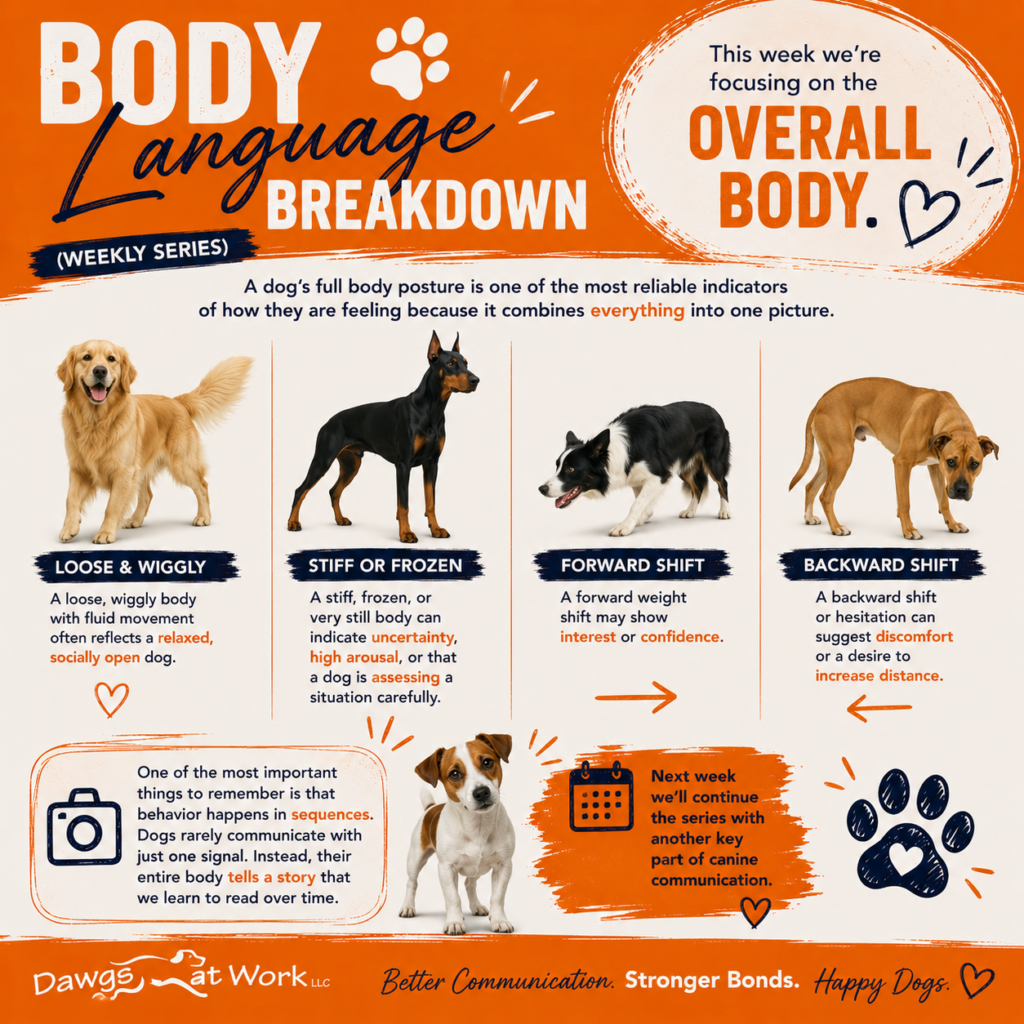
This week we’re focusing on the overall body. A dog’s full body posture is one of the most reliable indicators of how they are feeling because it combines everything into one picture. A loose, wiggly body with fluid movement often reflects a relaxed, socially open dog. A stiff, frozen, or very still body can indicate uncertainty, high arousal, or that a dog is assessing a situation carefully. A forward weight shift may show interest or confidence, while a backward shift or hesitation can suggest discomfort or a desire to increase distance.
One of the most important things to remember is that behavior happens in sequences. Dogs rarely communicate with just one signal. Instead, their entire body tells a story that we learn to read over time. Next week we’ll continue the series with another key part of canine communication.
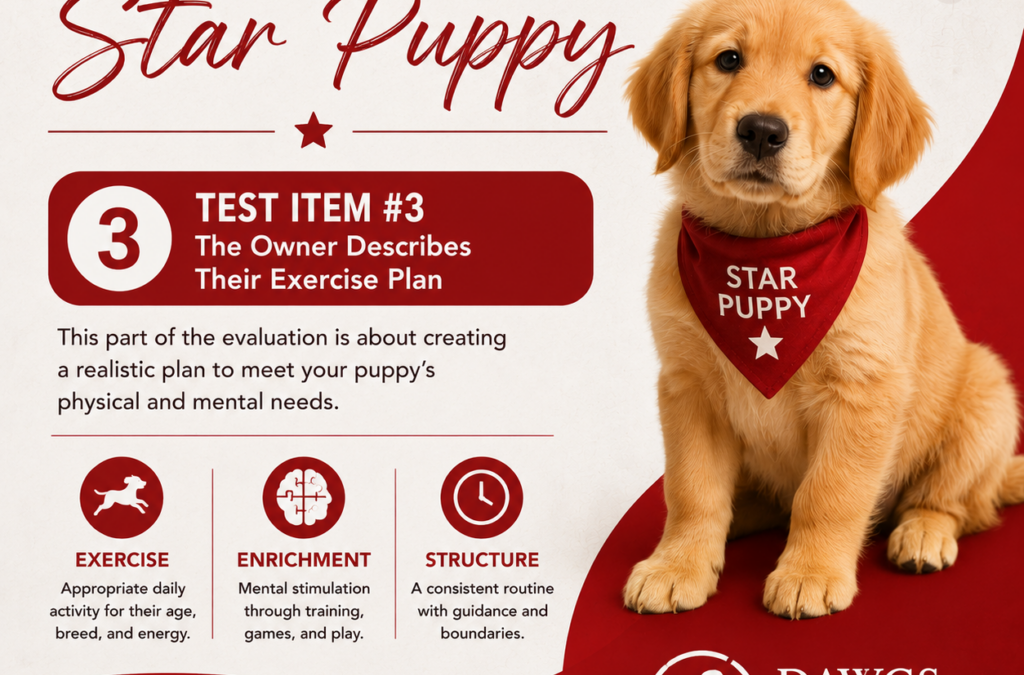
The next step in the Star Puppy evaluation is where the owner describes their exercise plan for the puppy. This part of the evaluation is about understanding how the puppy’s physical and mental needs will be met on a consistent basis.
Evaluators are looking for a realistic plan that includes appropriate daily exercise, mental enrichment, and structured activity that supports healthy development for that specific puppy and breed. This is not about having a perfect routine, but about showing awareness of the puppy’s needs and how the owner plans to meet them in everyday life. Exercise, enrichment, and structure all play a key role in preventing behavioral issues and building a well balanced dog.
At Dawgs at Work, we help families create practical, sustainable plans that fit their lifestyle while still supporting the dog’s long term wellbeing and training success. Next week we’ll continue with the next Star Puppy test item.
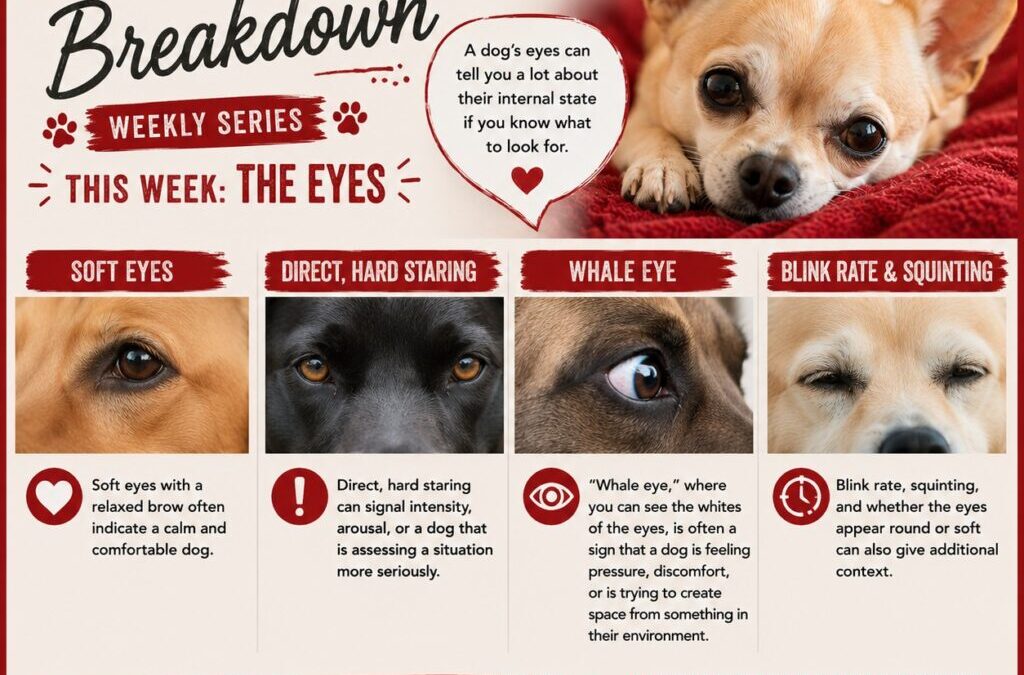
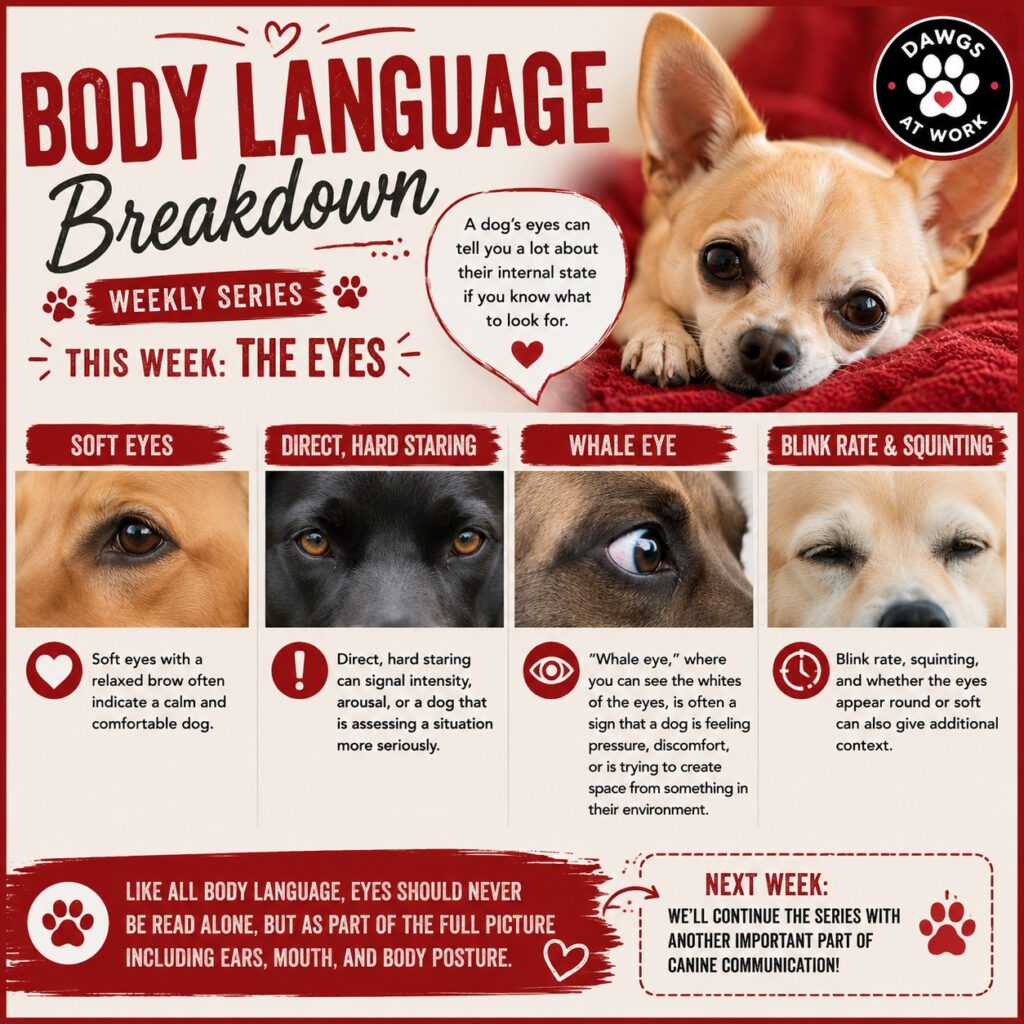
This week we’re focusing on the eyes. A dog’s eyes can tell you a lot about their internal state if you know what to look for. Soft eyes with a relaxed brow often indicate a calm and comfortable dog.
Direct, hard staring can signal intensity, arousal, or a dog that is assessing a situation more seriously. “Whale eye,” where you can see the whites of the eyes, is often a sign that a dog is feeling pressure, discomfort, or is trying to create space from something in their environment. Blink rate, squinting, and whether the eyes appear round or soft can also give additional context.
Like all body language, eyes should never be read alone, but as part of the full picture including ears, mouth, and body posture. Next week we’ll continue the series with another important part of canine communication.
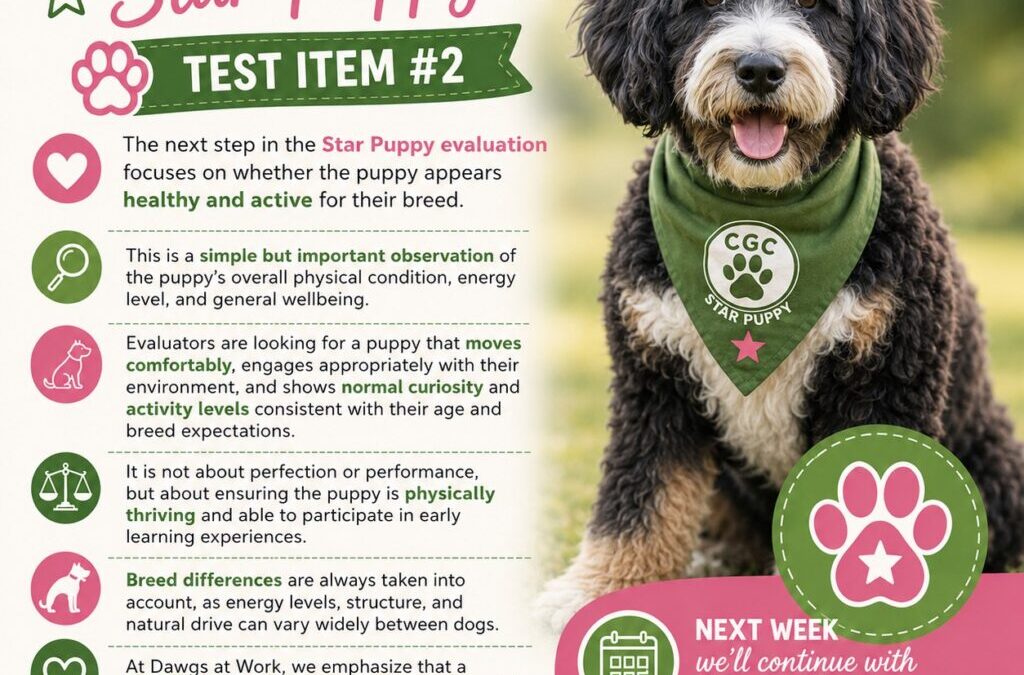
The next step in the Star Puppy evaluation focuses on whether the puppy appears healthy and active for their breed. This is a simple but important observation of the puppy’s overall physical condition, energy level, and general wellbeing. Evaluators are looking for a puppy that moves comfortably, engages appropriately with their environment, and shows normal curiosity and activity levels consistent with their age and breed expectations.
It is not about perfection or performance, but about ensuring the puppy is physically thriving and able to participate in early learning experiences. Breed differences are always taken into account, as energy levels, structure, and natural drive can vary widely between dogs. At Dawgs at Work, we emphasize that a healthy foundation is essential for successful training, confidence building, and long term development. Next week we’ll continue with the next Star Puppy test item.
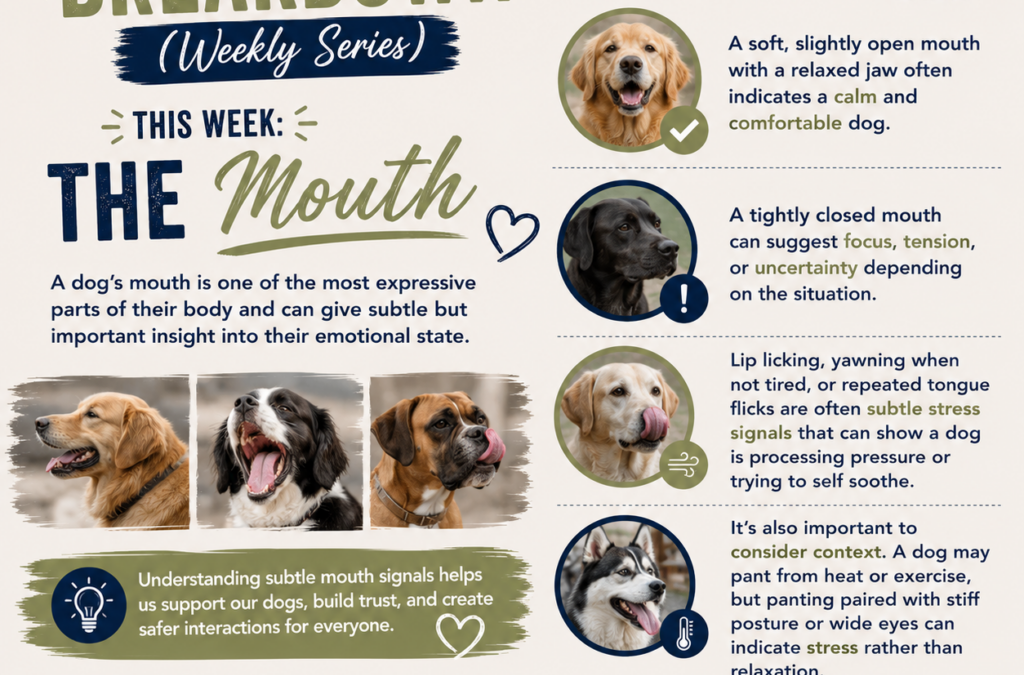
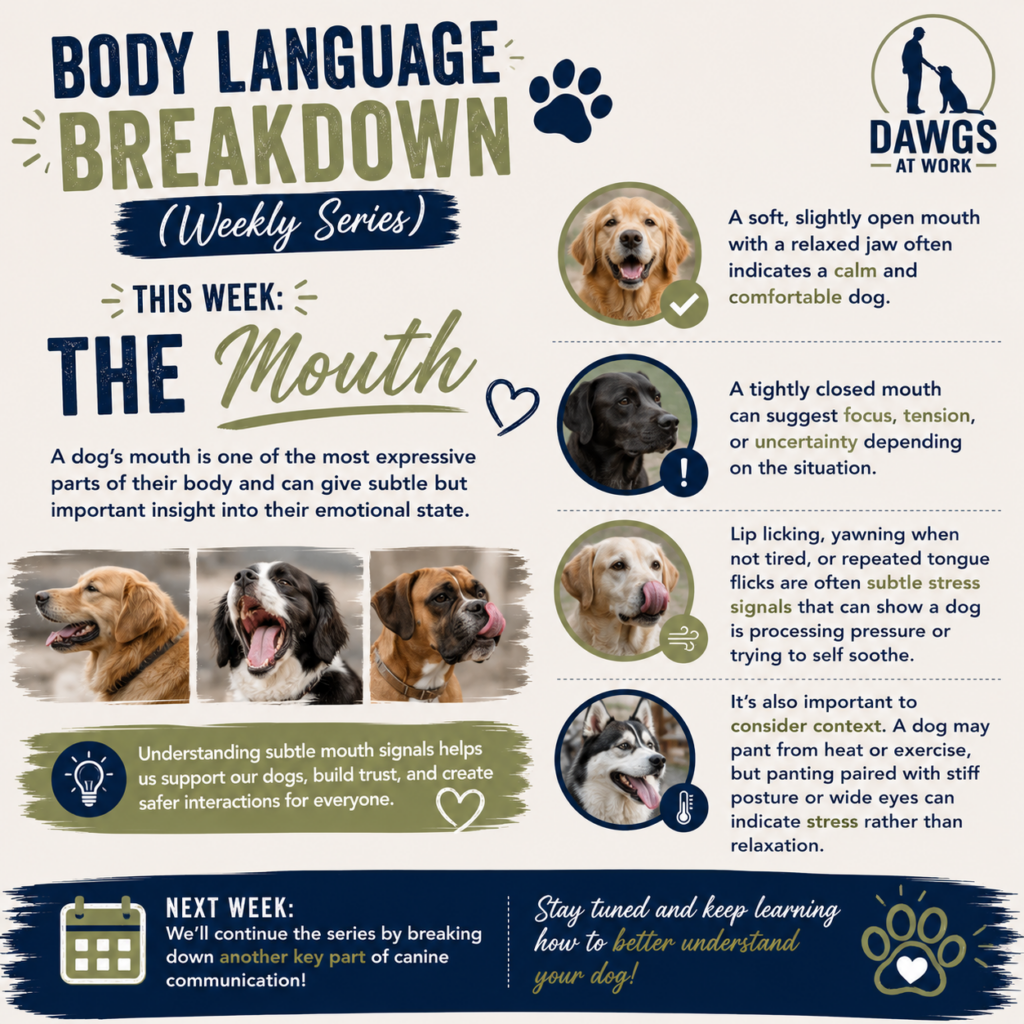
(Weekly Series) This week we’re focusing on the mouth. A dog’s mouth is one of the most expressive parts of their body and can give subtle but important insight into their emotional state. A soft, slightly open mouth with a relaxed jaw often indicates a calm and comfortable dog. A tightly closed mouth can suggest focus, tension, or uncertainty depending on the situation.
Lip licking, yawning when not tired, or repeated tongue flicks are often subtle stress signals that can show a dog is processing pressure or trying to self soothe. It’s also important to consider context. A dog may pant from heat or exercise, but panting paired with stiff posture or wide eyes can indicate stress rather than relaxation. Next week we’ll continue the series by breaking down another key part of canine communication.
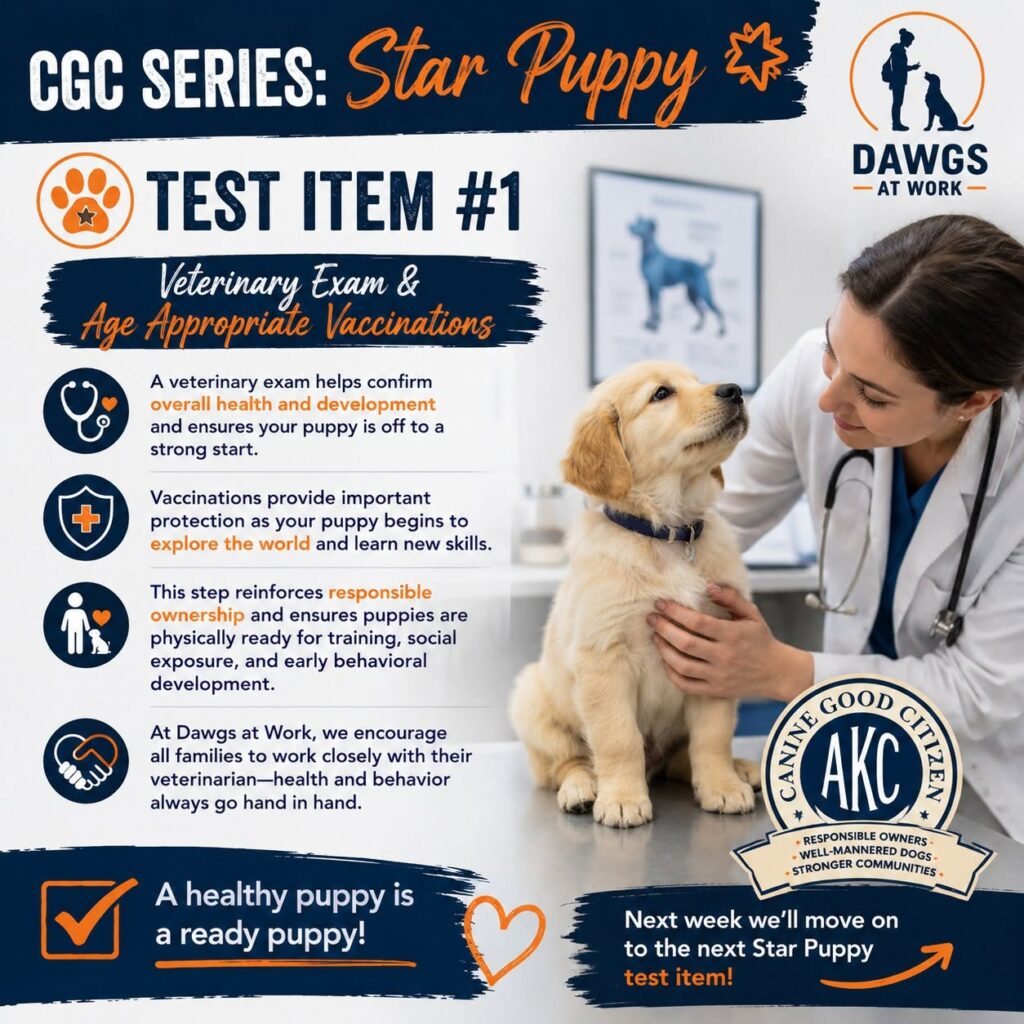
One of the first foundational steps in the Canine Good Citizen pathway is ensuring your puppy has appropriate veterinary care, including a full exam and age appropriate vaccinations. This isn’t just a box to check for the program, it’s an essential part of setting your puppy up for a healthy, safe, and successful start in life.
A veterinary exam helps confirm overall health and development, while vaccines provide important protection as your puppy begins to explore the world and learn new skills. For training purposes, this step also reinforces responsible ownership and ensures puppies are physically ready for structured learning, social exposure, and early behavioral development.
At Dawgs at Work, we encourage all families to work closely with their veterinarian throughout the CGC journey, as health and behavior always go hand in hand. Next week we’ll move on to the next Star Puppy test item.