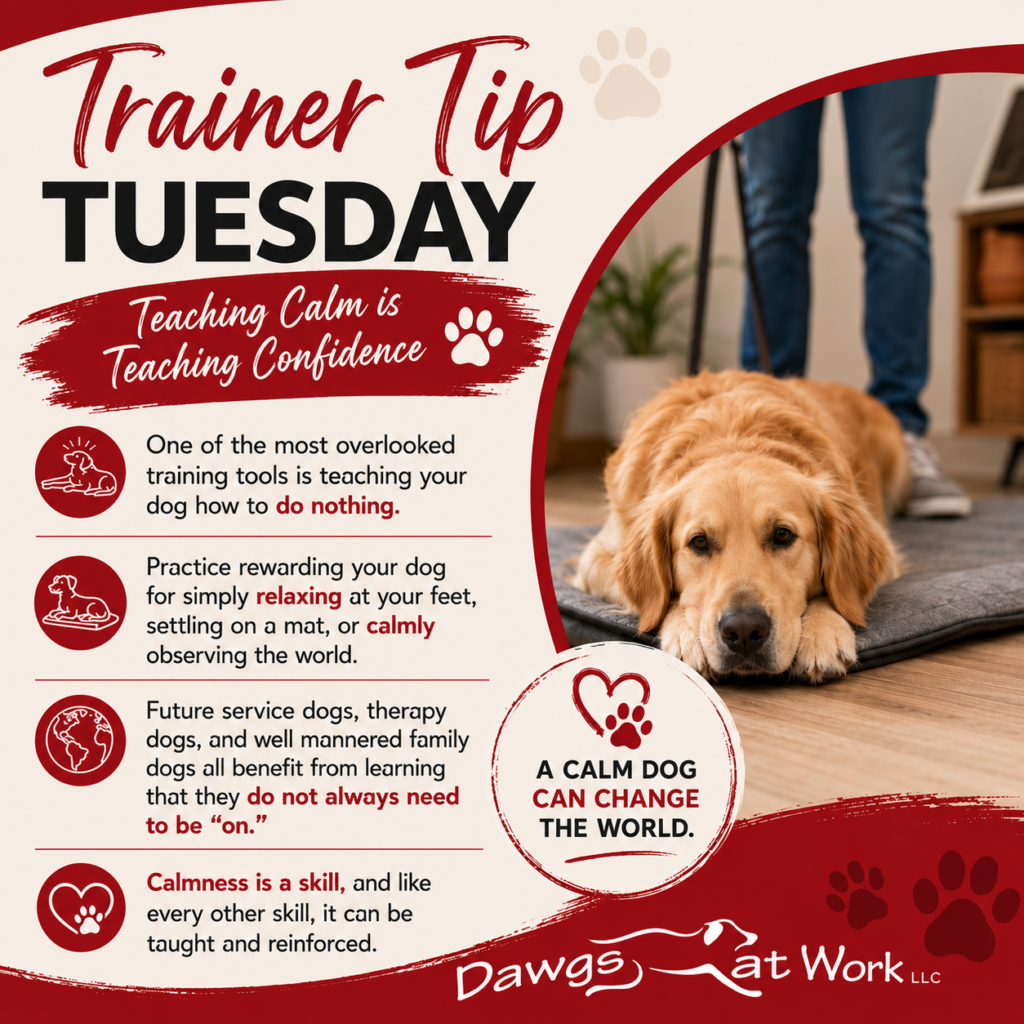
One of the most overlooked training tools is teaching your dog how to do nothing. We spend so much time teaching sits, downs, recalls, and tricks that we sometimes forget to teach calmness. Practice rewarding your dog for simply relaxing at your feet, settling on a mat, or calmly observing the world without needing to interact with everything around them. Future service dogs, therapy dogs, and well mannered family dogs all benefit from learning that they do not always need to be “on.” Calmness is a skill, and like every other skill, it can be taught and reinforced.
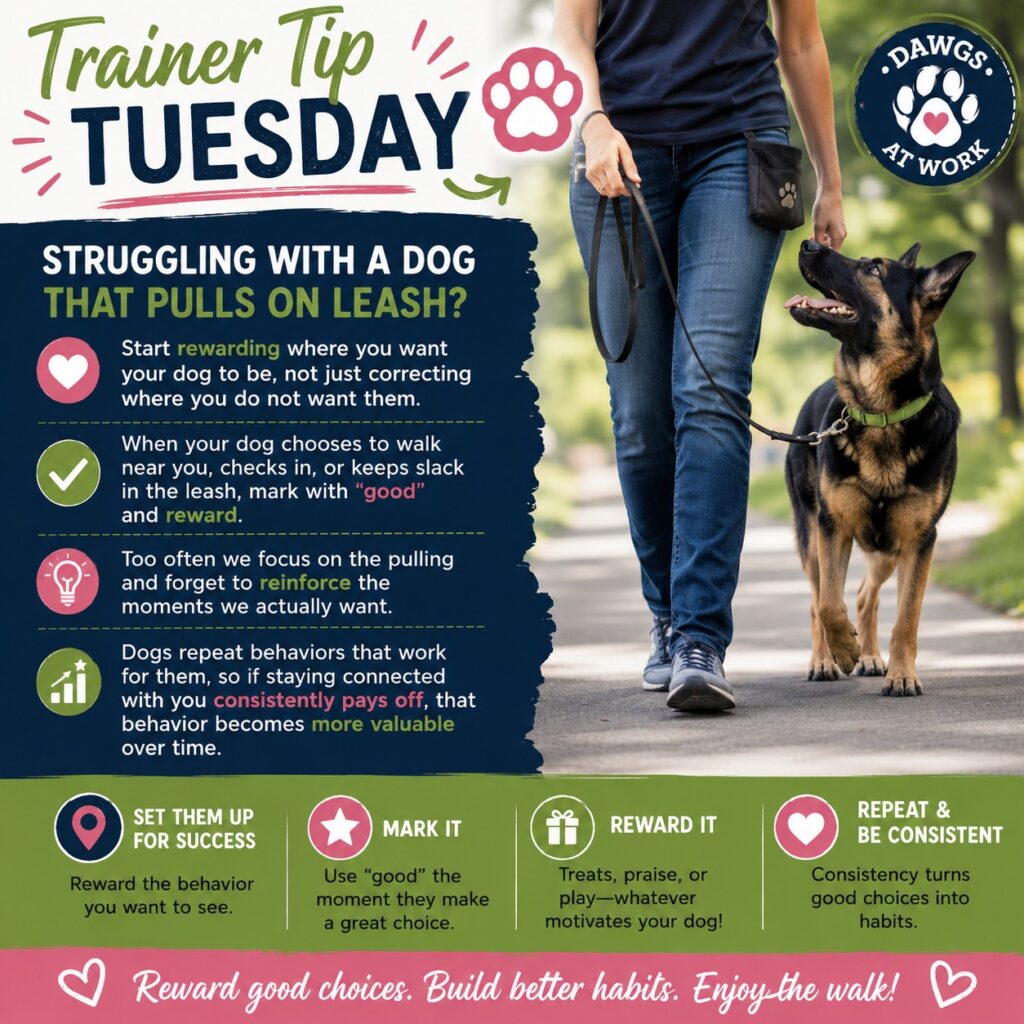
Struggling with a dog that pulls on leash? Start rewarding where you want your dog to be, not just correcting where you do not want them. When your dog chooses to walk near you, checks in, or keeps slack in the leash, mark with “good” and reward. Too often we focus on the pulling and forget to reinforce the moments we actually want. Dogs repeat behaviors that work for them, so if staying connected with you consistently pays off, that behavior becomes more valuable over time.
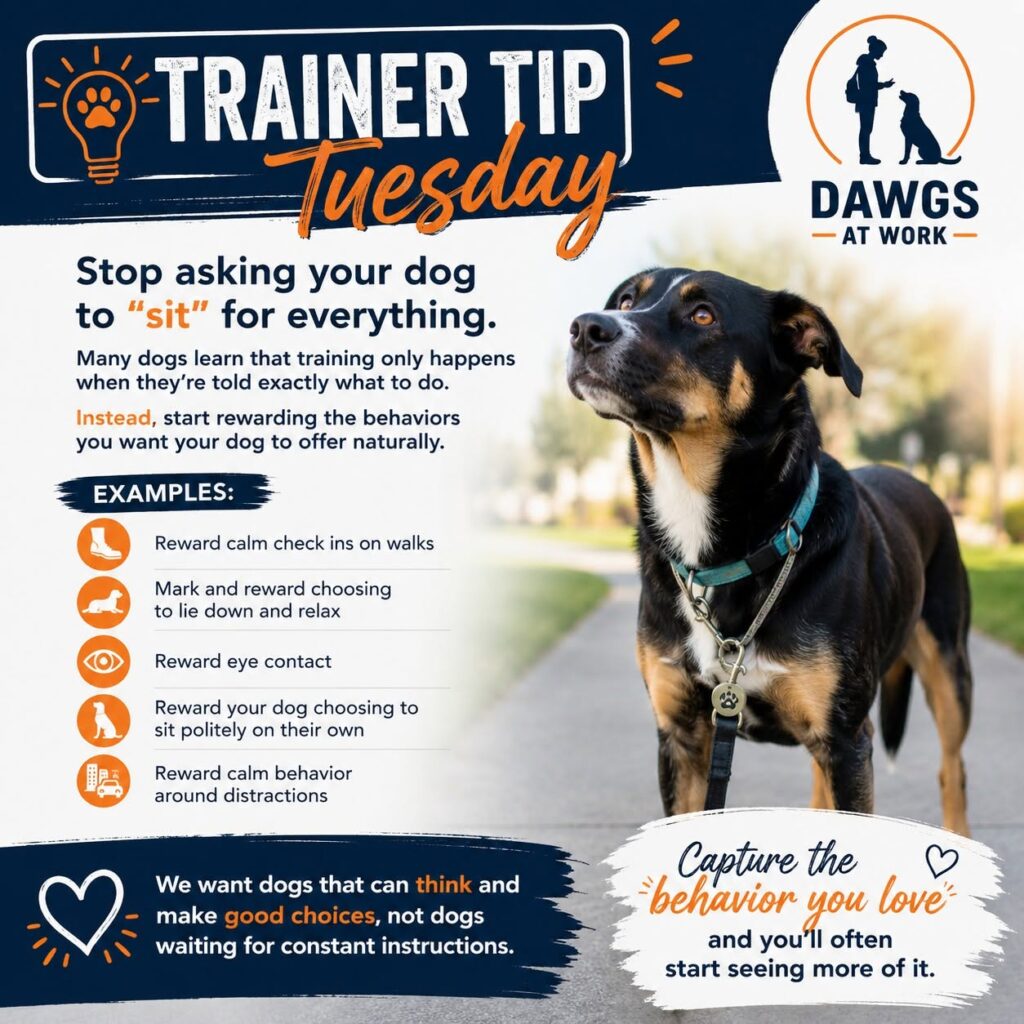
Stop asking your dog to “sit” for everything. Many dogs learn that training only happens when they’re told exactly what to do. Instead, start rewarding the behaviors you want your dog to offer naturally.
Examples:
• Reward calm check ins on walks
• Mark and reward choosing to lie down and relax
• Reward eye contact
• Reward your dog choosing to sit politely on their own
• Reward calm behavior around distractions
We want dogs that can think and make good choices, not dogs waiting for constant instructions. Capture the behavior you love and you’ll often start seeing more of it.
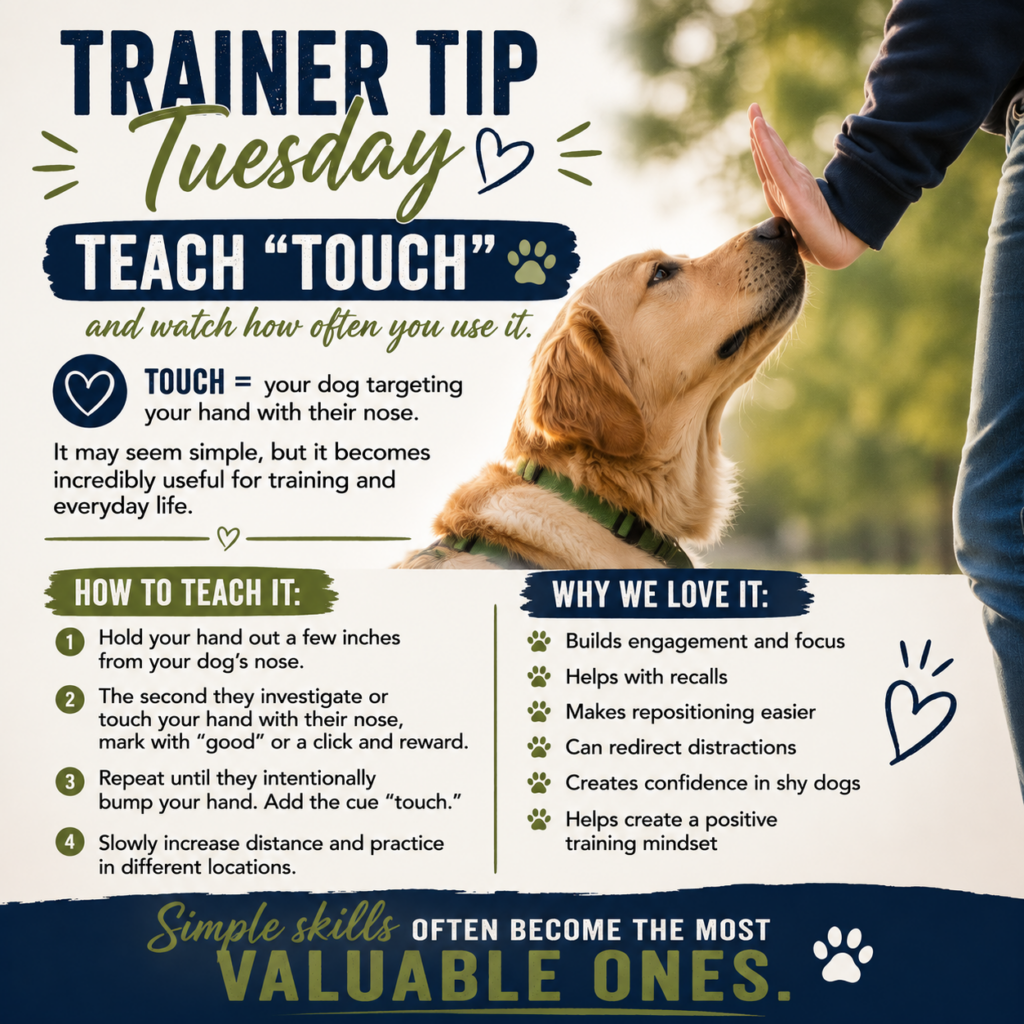
Teach “touch” and watch how often you use it. Touch = your dog targeting your hand with their nose. It may seem simple, but it becomes incredibly useful for training and everyday life. How to teach it: Hold your hand out a few inches from your dog’s nose. The second they investigate or touch your hand with their nose, mark with “good” or a click and reward. Repeat until they intentionally bump your hand. Add the cue “touch.” Slowly increase distance and practice in different locations. Simple skills often become the most valuable ones. Why we love it: