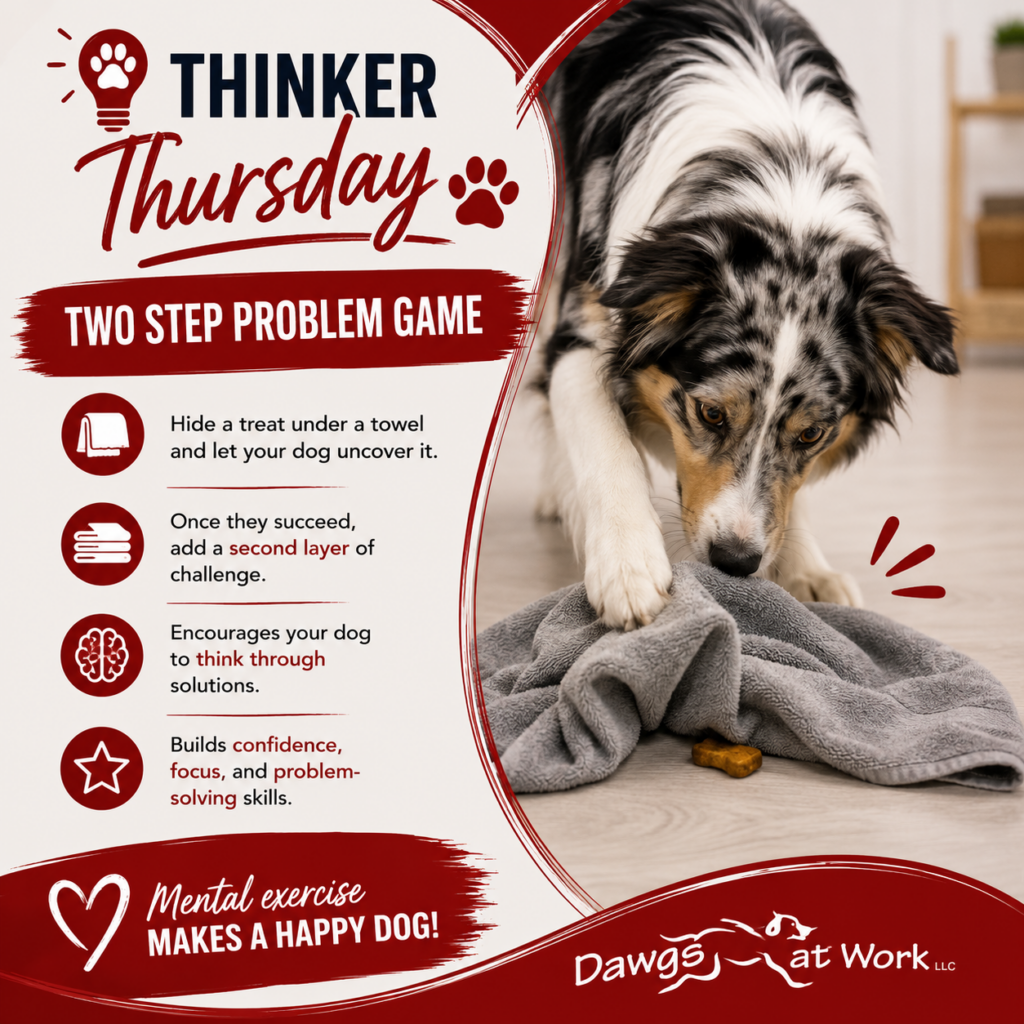
Try a “two step problem” game with your dog this week. Start by placing a treat under a towel or light blanket and letting your dog figure out how to uncover it. Once they succeed, immediately make it slightly harder by adding a second layer of challenge, like folding the towel tighter or placing the reward in a different spot. The goal is to encourage your dog to think through solutions instead of just relying on repetition. Games like this build confidence, focus, and problem-solving skills while giving your dog a fun mental workout.
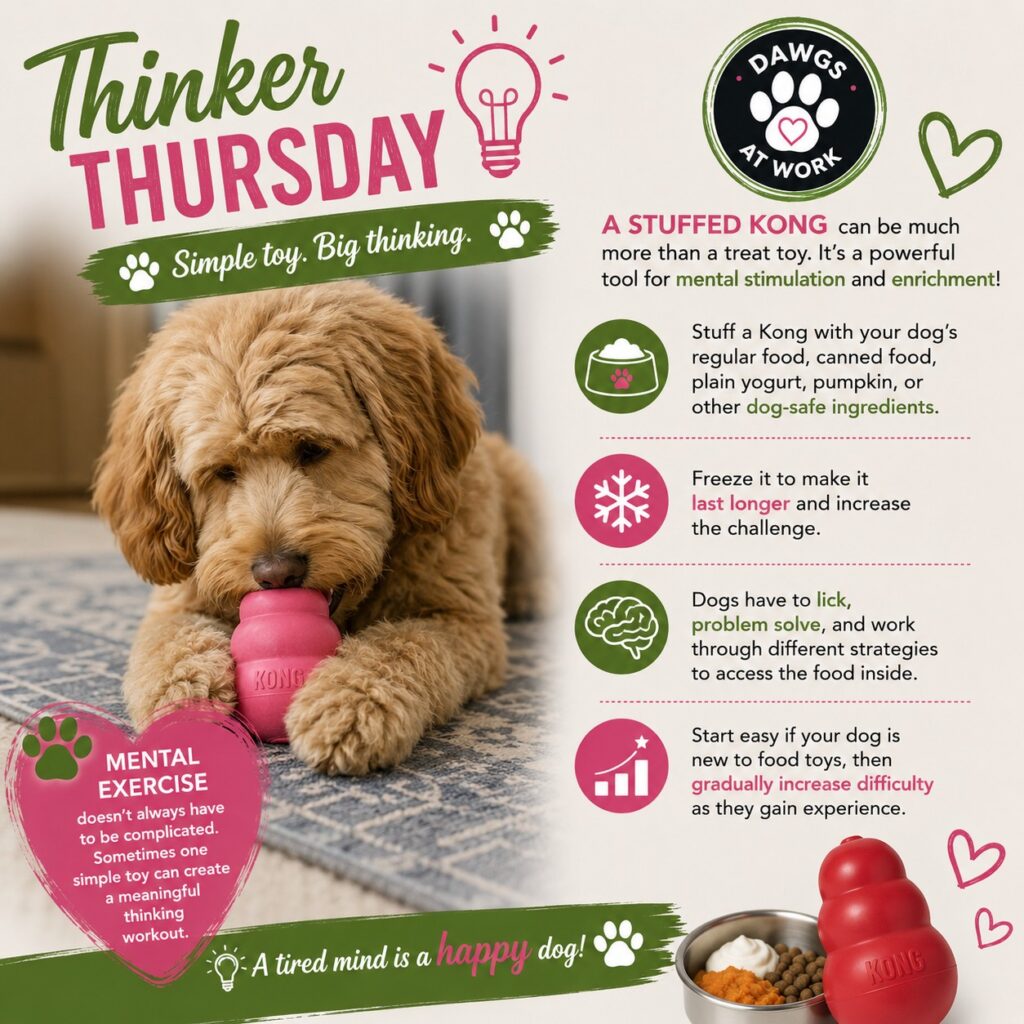
A stuffed Kong can be much more than a treat toy. Stuffing a Kong with your dog’s regular food, canned food, plain yogurt, pumpkin, or other dog safe ingredients and then freezing it can create a longer lasting mental challenge. Dogs have to lick, problem solve, and work through different strategies to access the food inside. Start easy if your dog is new to food toys, then gradually increase difficulty as they gain experience. Mental exercise does not always have to be complicated. Sometimes one simple toy can create a meaningful thinking workout.
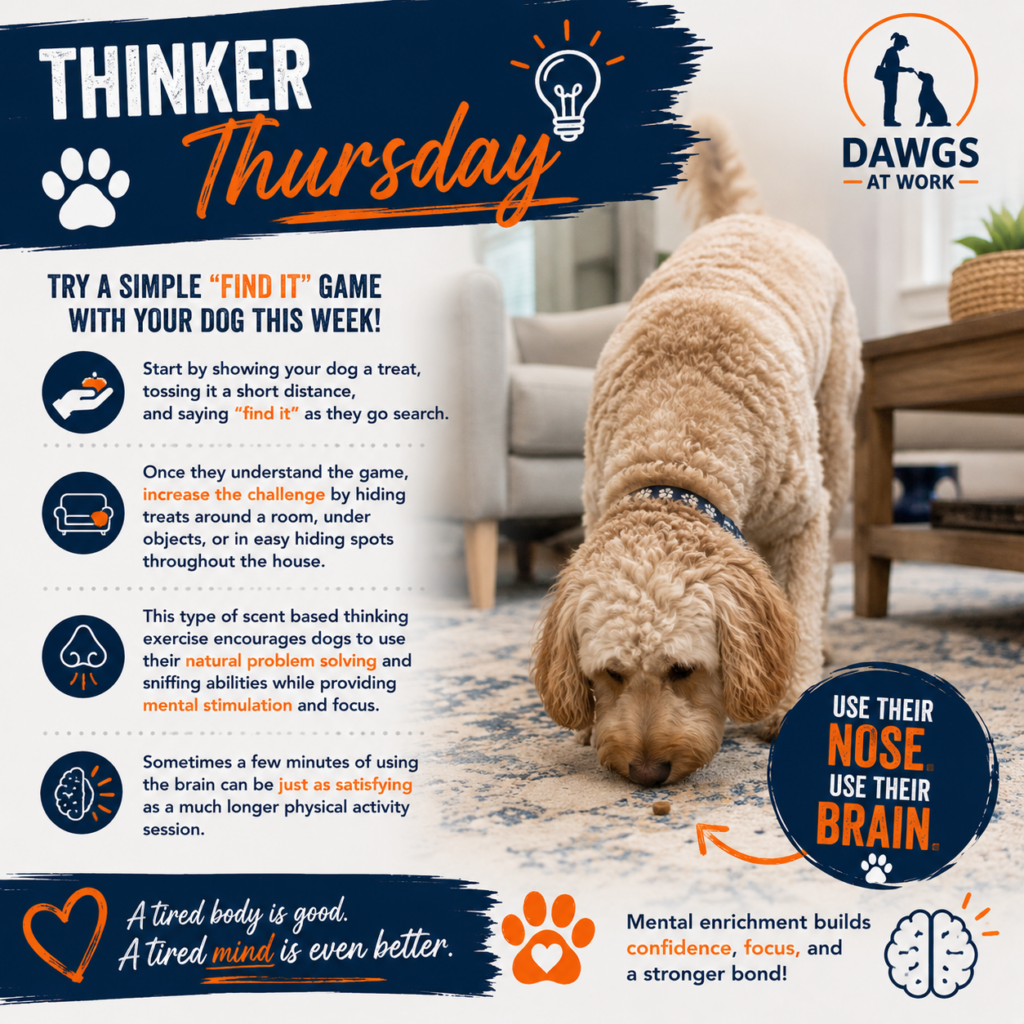
Try a simple “find it” game with your dog this week. Start by showing your dog a treat, tossing it a short distance, and saying “find it” as they go search. Once they understand the game, increase the challenge by hiding treats around a room, under objects, or in easy hiding spots throughout the house. This type of scent based thinking exercise encourages dogs to use their natural problem solving and sniffing abilities while providing mental stimulation and focus. Sometimes a few minutes of using the brain can be just as satisfying as a much longer physical activity session.
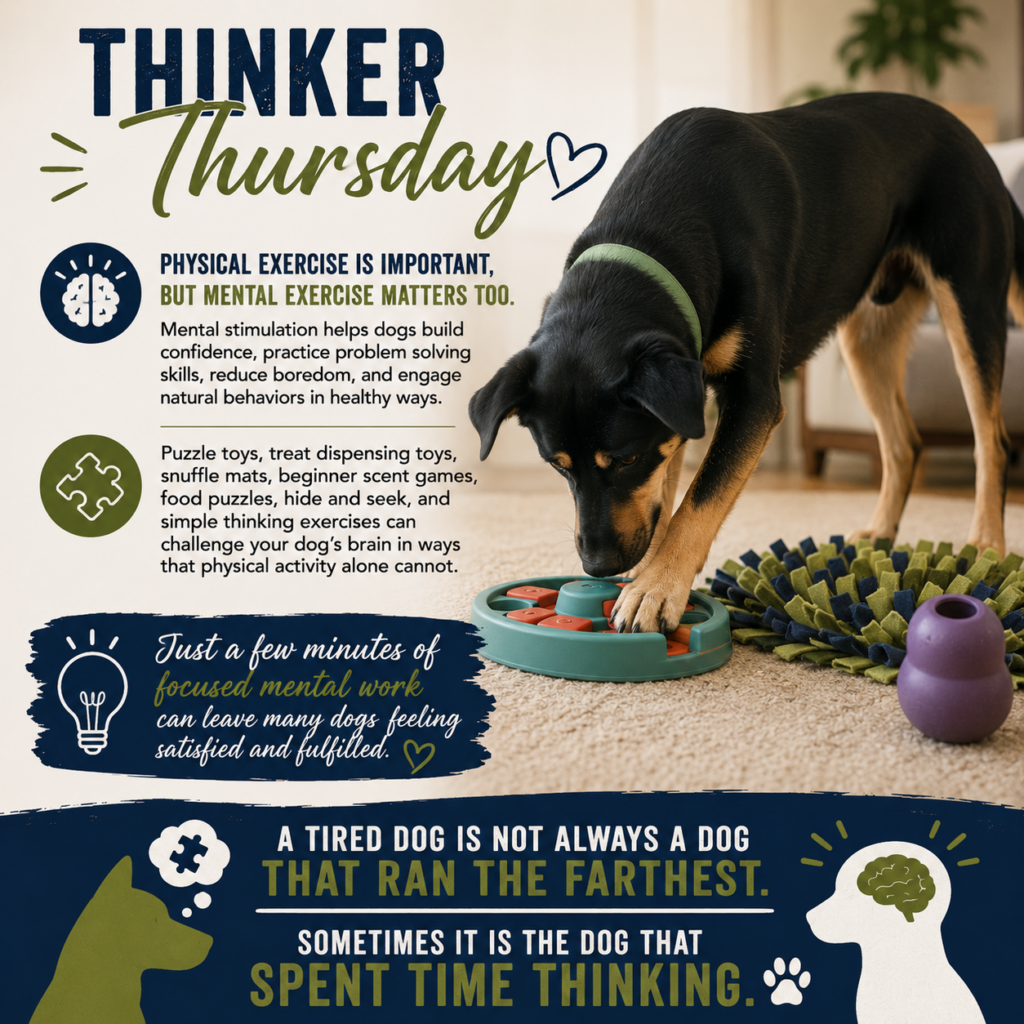
Physical exercise is important, but mental exercise matters too. Mental stimulation helps dogs build confidence, practice problem solving skills, reduce boredom, and engage natural behaviors in healthy ways. Puzzle toys, treat dispensing toys, snuffle mats, beginner scent games, food puzzles, hide and seek, and simple thinking exercises can challenge your dog’s brain in ways that physical activity alone cannot. Just a few minutes of focused mental work can leave many dogs feeling satisfied and fulfilled. A tired dog is not always a dog that ran the farthest. Sometimes it is the dog that spent time thinking.