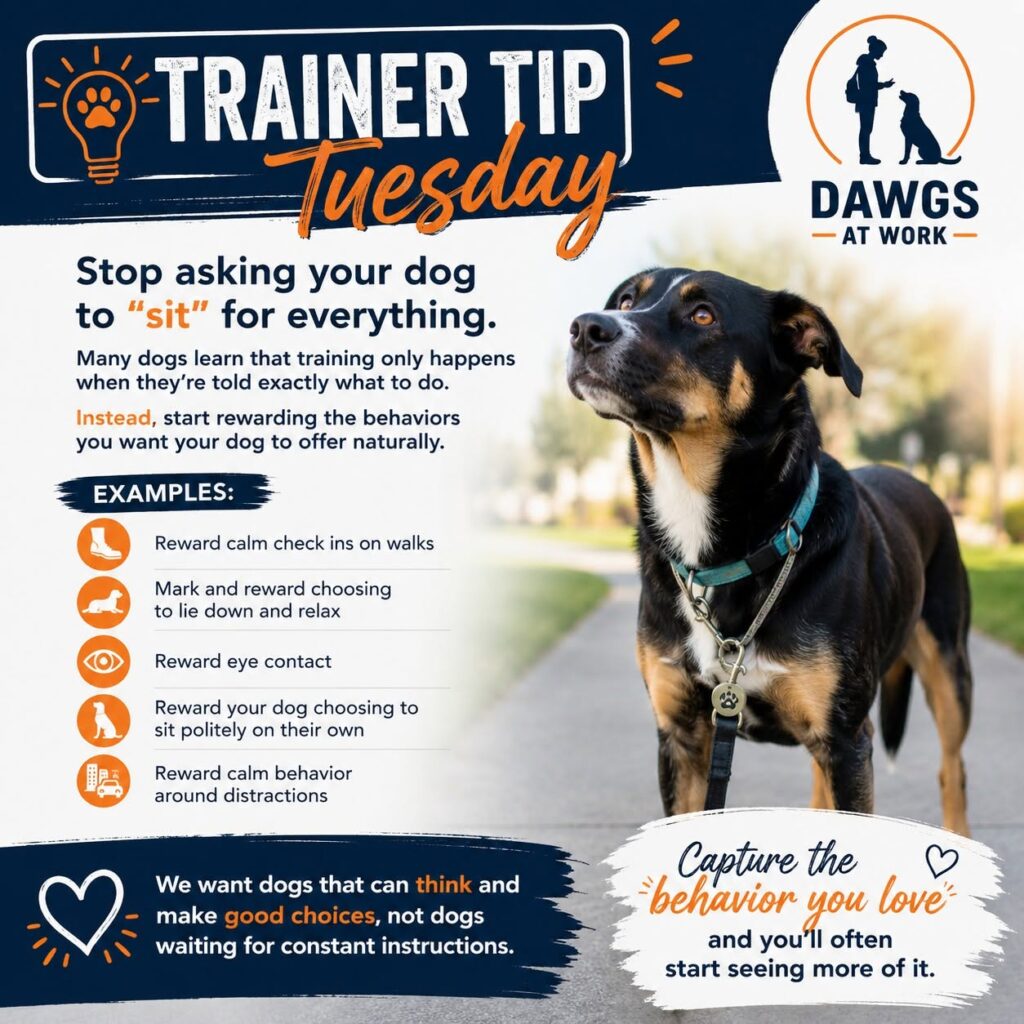
Stop asking your dog to “sit” for everything. Many dogs learn that training only happens when they’re told exactly what to do. Instead, start rewarding the behaviors you want your dog to offer naturally.
Examples:
• Reward calm check ins on walks
• Mark and reward choosing to lie down and relax
• Reward eye contact
• Reward your dog choosing to sit politely on their own
• Reward calm behavior around distractions
We want dogs that can think and make good choices, not dogs waiting for constant instructions. Capture the behavior you love and you’ll often start seeing more of it.
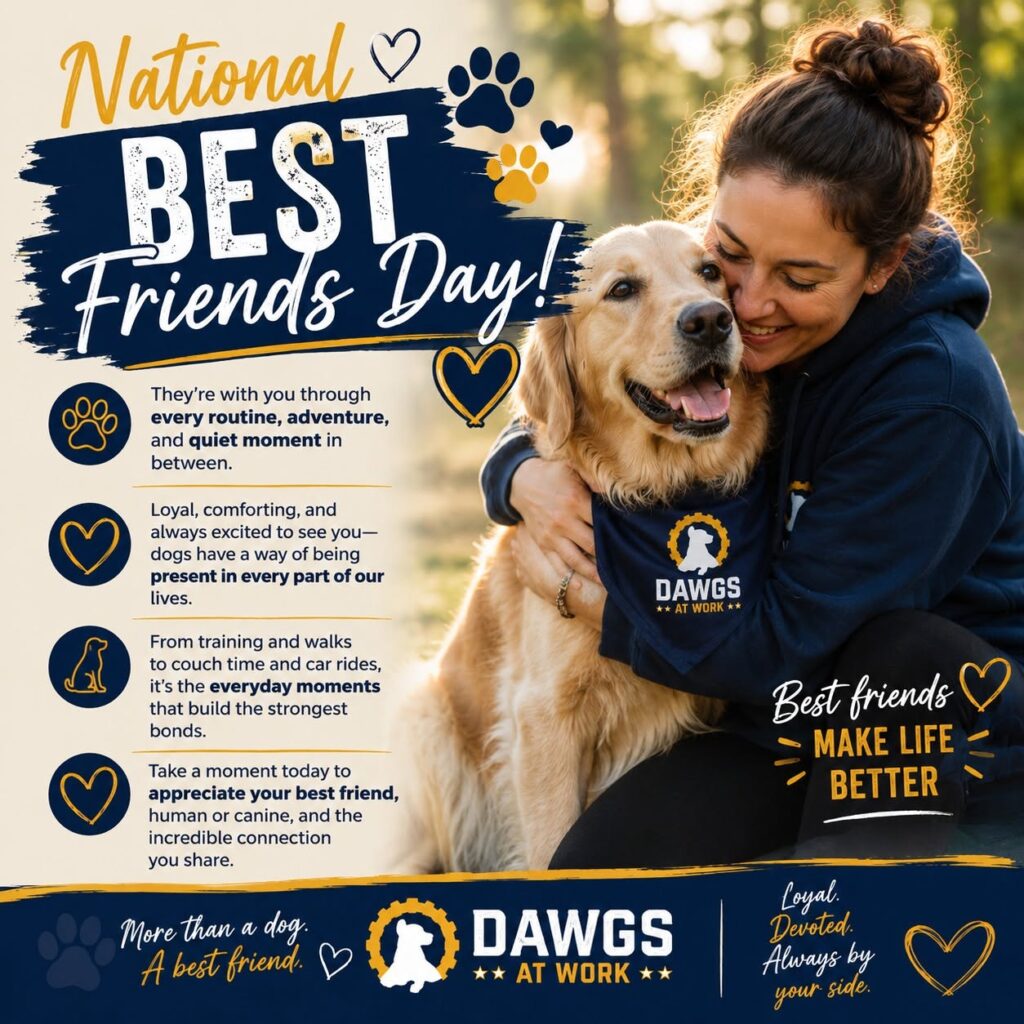
Happy National Best Friends Day! Today is all about celebrating the ones who are always by your side, through every routine, adventure, and quiet moment in between. For many of us, that best friend comes with four legs, a wagging tail, and an unwavering excitement every time we walk through the door. Dogs have a way of being present in every part of our lives, offering loyalty, comfort, and joy in a way that is hard to put into words. Whether you’re working on training goals, going for walks, or just relaxing at home, those everyday moments are what make the bond so special. Take a moment today to appreciate your best friend, human or canine, and the connection you share.
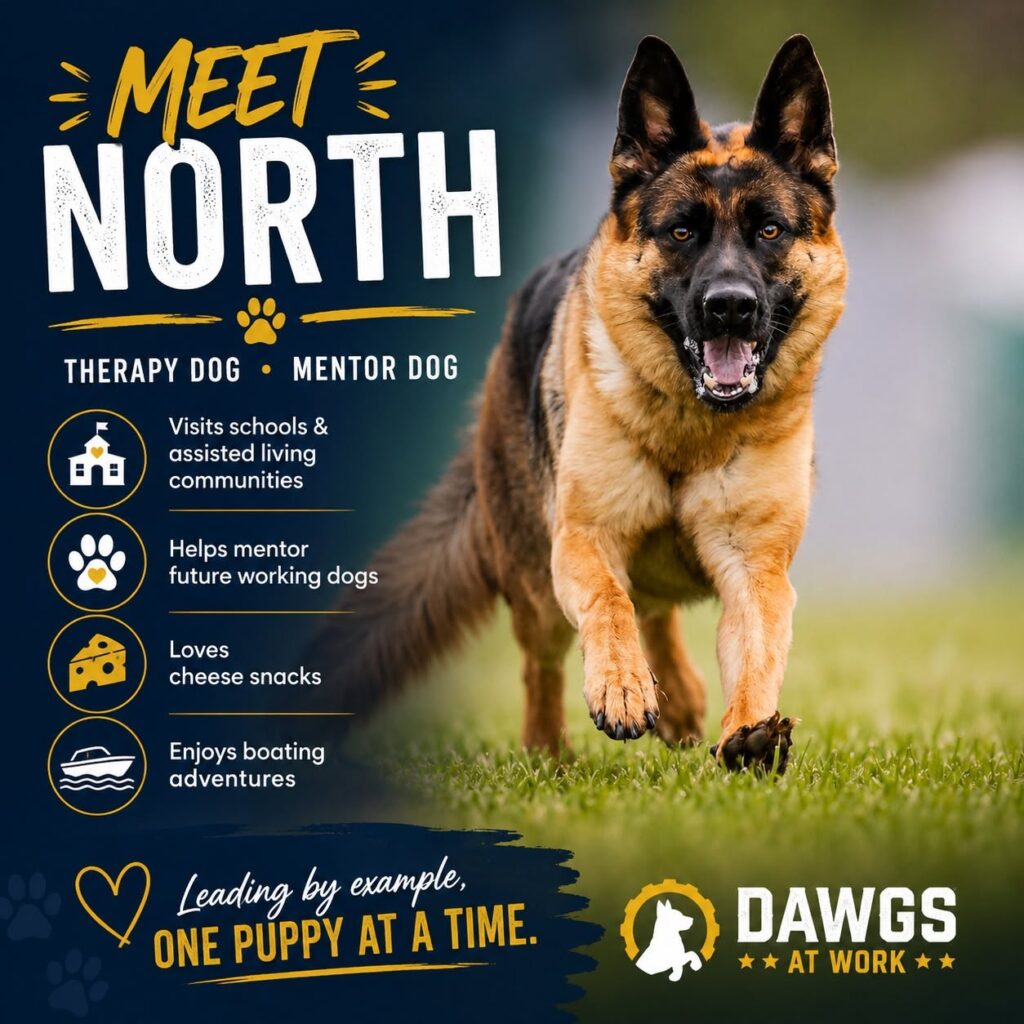
North is our seven-year-old female German Shepherd and one of the special dogs who helps make Dawgs at Work what it is today. She lives with our Lead Trainer and serves as both a therapy dog and a mentor dog within our program.
As a therapy dog, North regularly visits schools, assisted living communities, and other facilities where she provides comfort, companionship, and plenty of smiles. Her calm, steady personality makes her a wonderful ambassador for the important work therapy dogs do e-very day.
When she’s not out making visits, North takes on another important role behind the scenes. As one of our mentor dogs, she helps guide incoming puppies as they learn appropriate dog manners, social skills, and etiquette. From teaching respectful interactions to helping young dogs build confidence, North plays a valuable role in shaping the next generation of working dogs.
Outside of work, North enjoys the simple things in life. Her favorite treats are cheese snacks, and when Wisconsin weather cooperates, you’ll often find her enjoying time out on the boat with her family or competing in dog sports like Fast CAT!
Thank you, North, for everything you do for our clients, our community, and the puppies who look up to you every day.
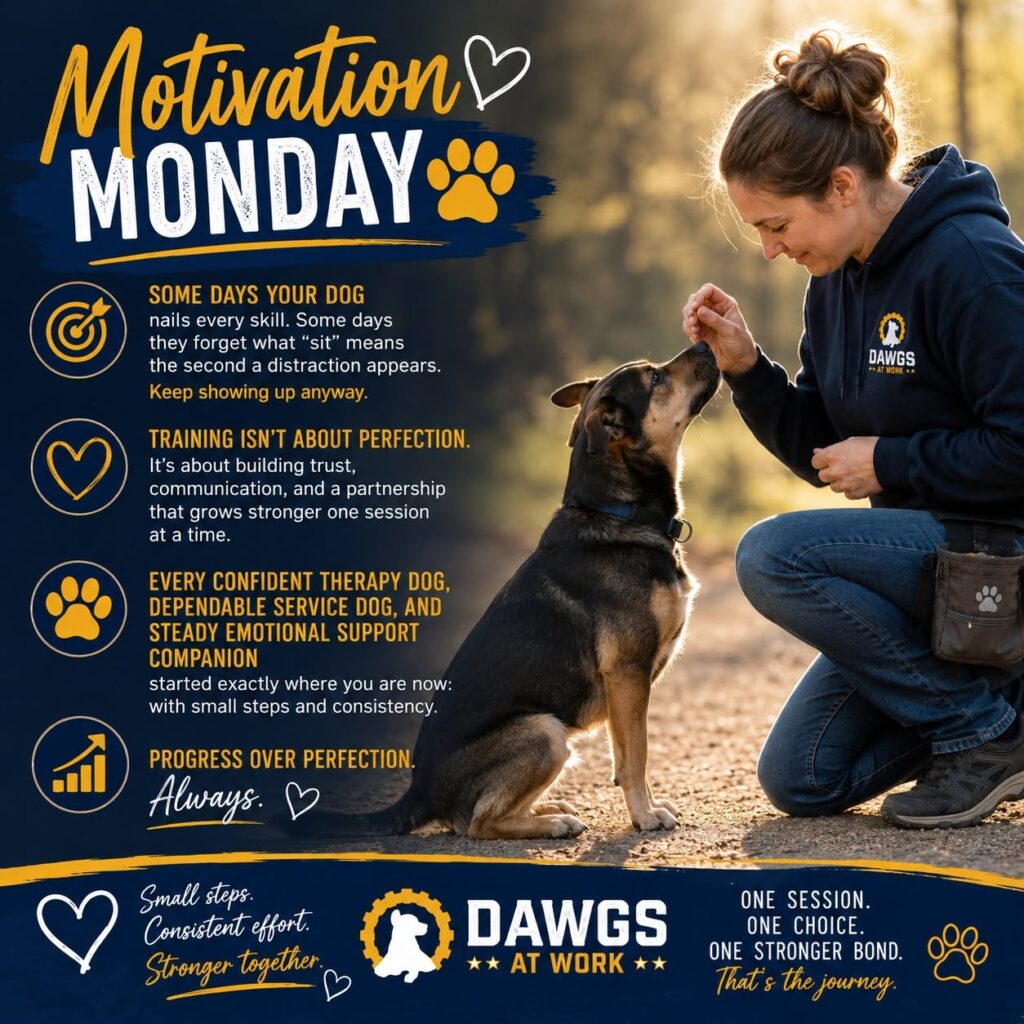
Some days your dog nails every skill. Some days they forget what “sit” means the second a distraction appears. Keep showing up anyway. Training isn’t about perfection. It’s about building trust, communication, and a partnership that grows stronger one session at a time. Every confident therapy dog, dependable service dog, and steady emotional support companion started exactly where you are now: with small steps and consistency. Progress over perfection. Always.
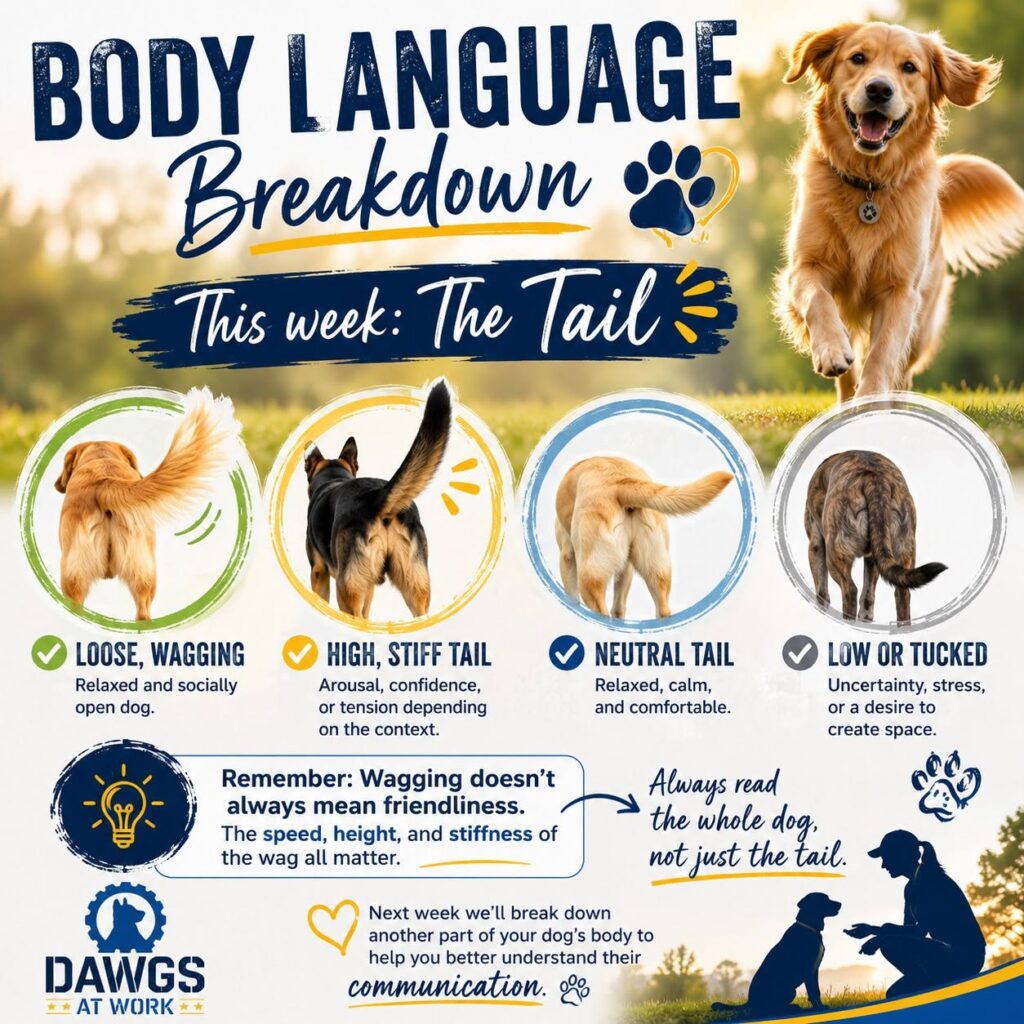
This week we’re focusing on the tail. A dog’s tail can tell us a lot, but just like every other part of body language, it should always be read in context. A loose, wagging tail that moves freely through the body often reflects a relaxed or socially open dog. A high, stiff tail can indicate arousal, confidence, or sometimes tension depending on the rest of the body. A low or tucked tail may suggest uncertainty, stress, or a desire to create space. It is also important to remember that wagging does not always mean friendliness. The speed, height, and stiffness of the wag all matter, and the dog’s overall posture is what gives the clearest picture of how they are feeling. Next week we’ll break down another part of your dog’s body to help you better understand their communication.