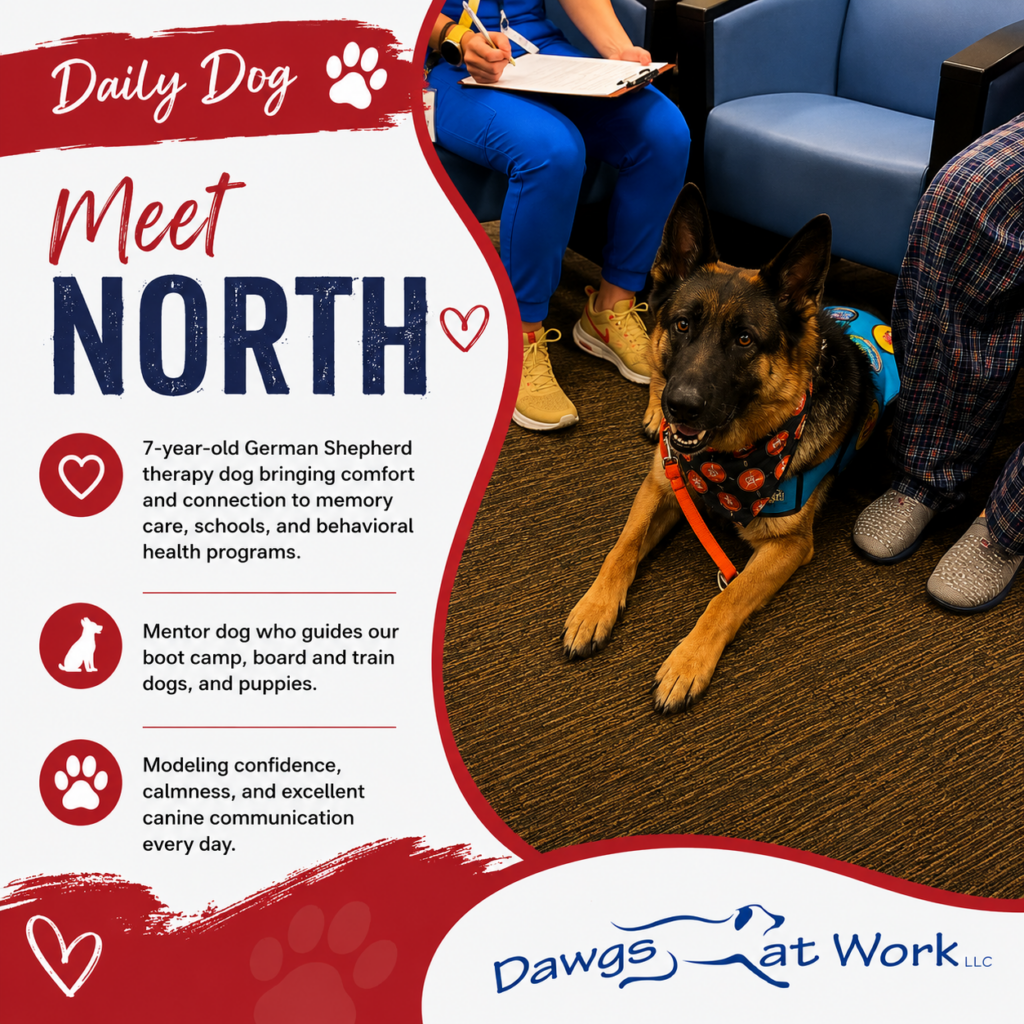
Meet North, our 7-year-old German Shepherd and one of the incredible therapy dogs at Dawgs at Work! North serves memory care communities, elementary schools, and behavioral health programs, where her calm, gentle presence brings comfort and connection to those she meets.
When she’s not out visiting the community, North has another important job as one of our mentor dogs. She helps guide our boot camp, board and train dogs, and puppies by modeling confidence, calmness, and excellent canine communication. We’re so proud to have North as part of our team and grateful for the difference she makes every single day.
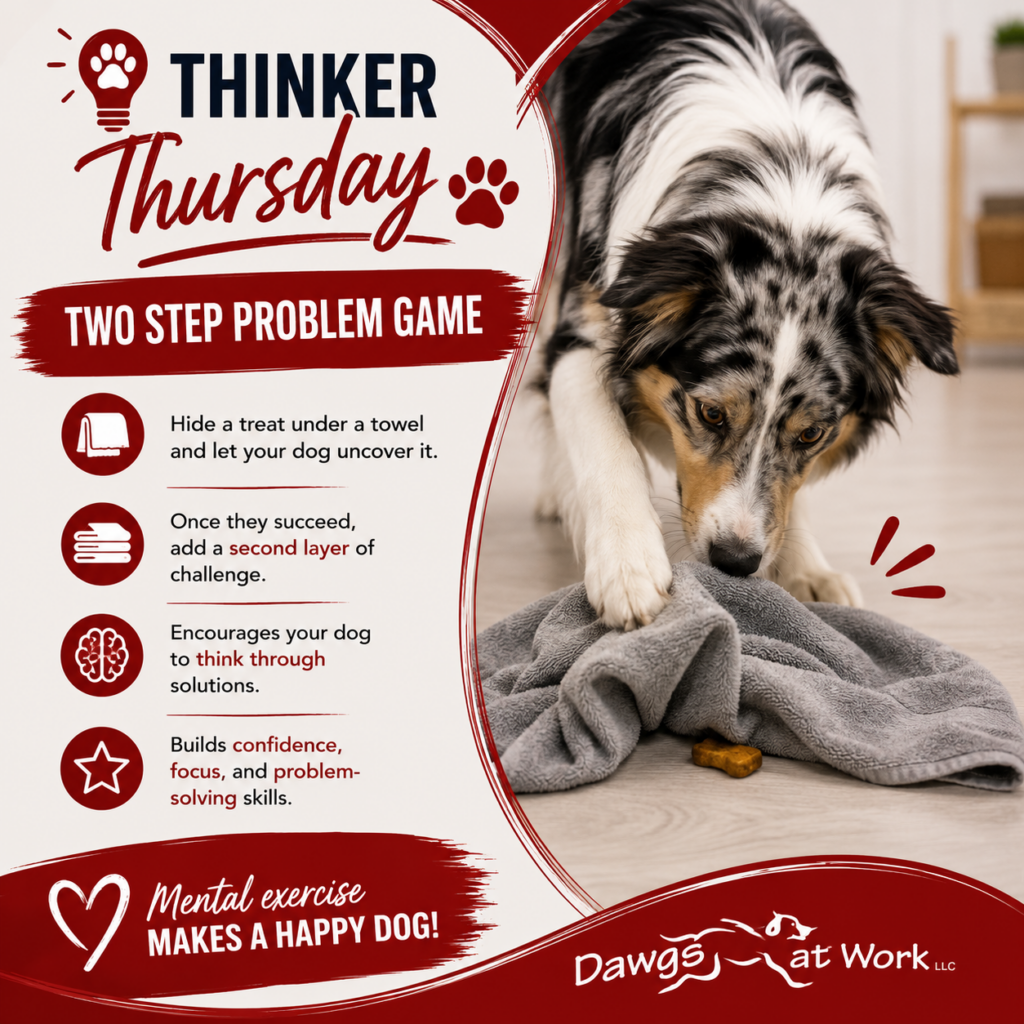
Try a “two step problem” game with your dog this week. Start by placing a treat under a towel or light blanket and letting your dog figure out how to uncover it. Once they succeed, immediately make it slightly harder by adding a second layer of challenge, like folding the towel tighter or placing the reward in a different spot. The goal is to encourage your dog to think through solutions instead of just relying on repetition. Games like this build confidence, focus, and problem-solving skills while giving your dog a fun mental workout.
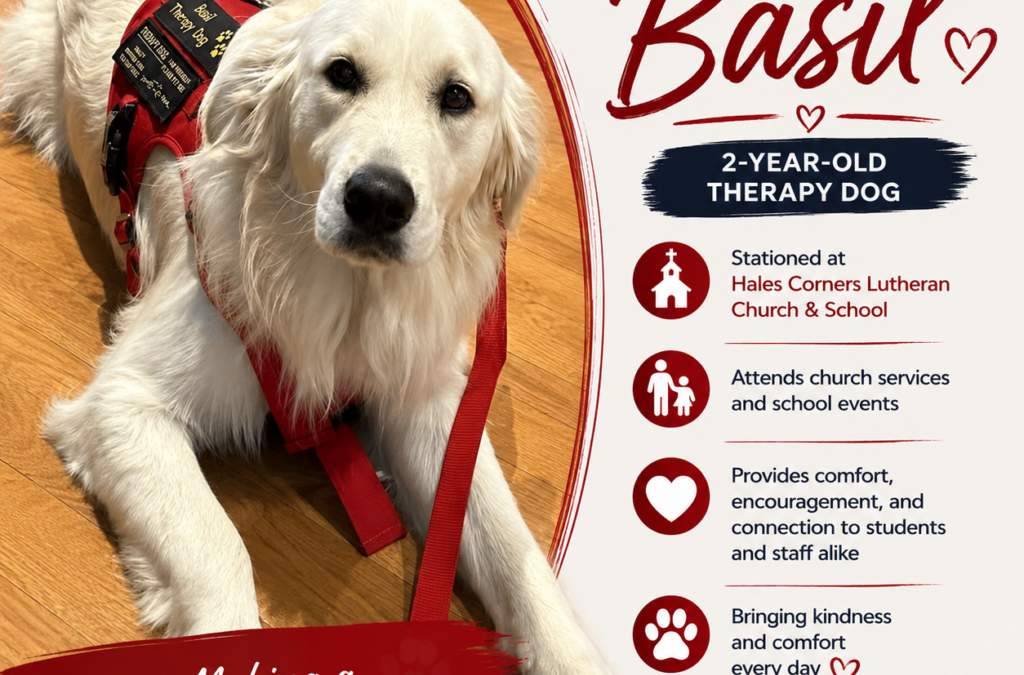
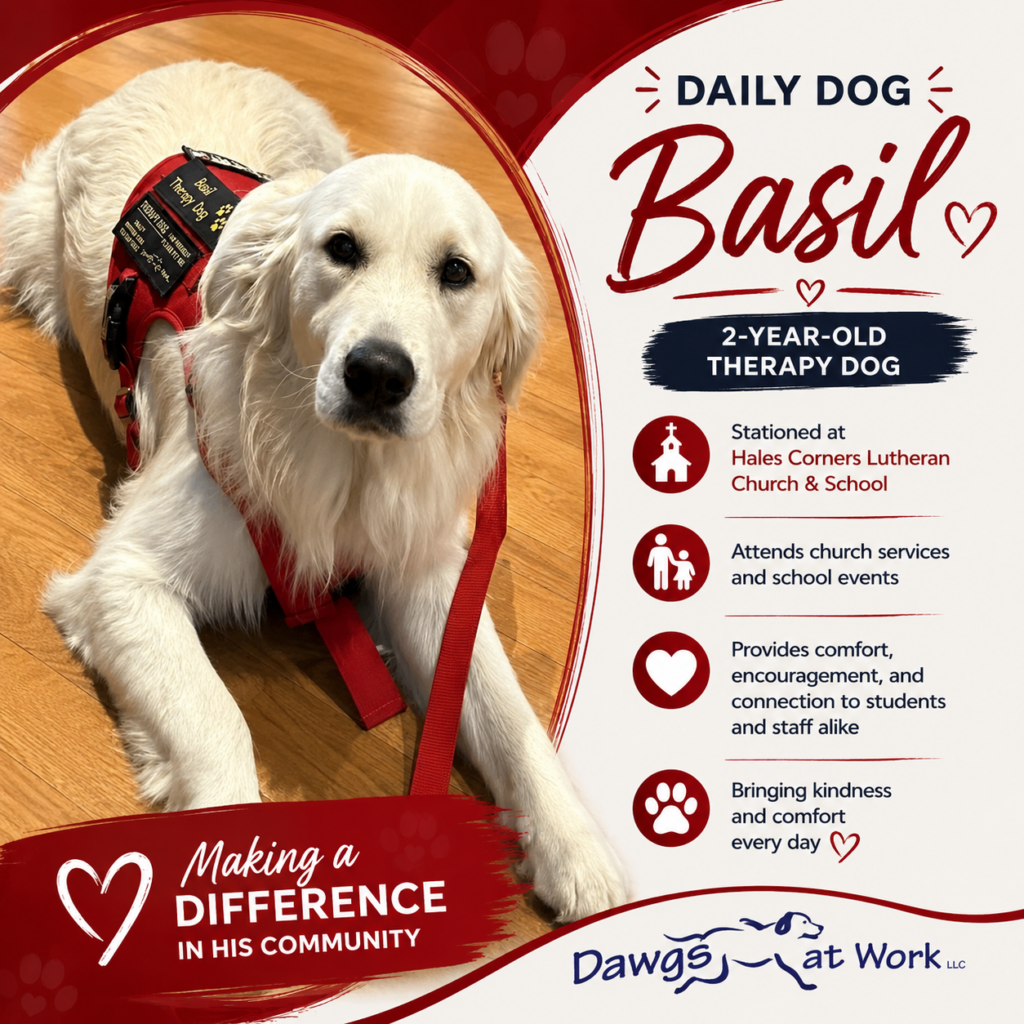
Meet Basil! Some dogs have a special way of bringing people together, and Basil is one of them. At just 2 years old, Basil serves as the therapy dog for the dog ministry at Hales Corners Lutheran Church and School, where his calm presence and friendly personality make a meaningful impact every day.
Whether he’s attending church services, visiting classrooms, participating in school events, or simply being available for students and staff who need a moment of comfort, Basil reminds us that support doesn’t always come in the form of words. Sometimes it’s a gentle nudge, a wagging tail, or a quiet companion by your side. Therapy dogs like Basil help create welcoming environments where children feel safe, encouraged, and supported. From celebrating achievements to helping through difficult days, he’s always ready to brighten someone’s day with unconditional kindness. We’re incredibly proud of the difference Basil continues to make in his church and school community.
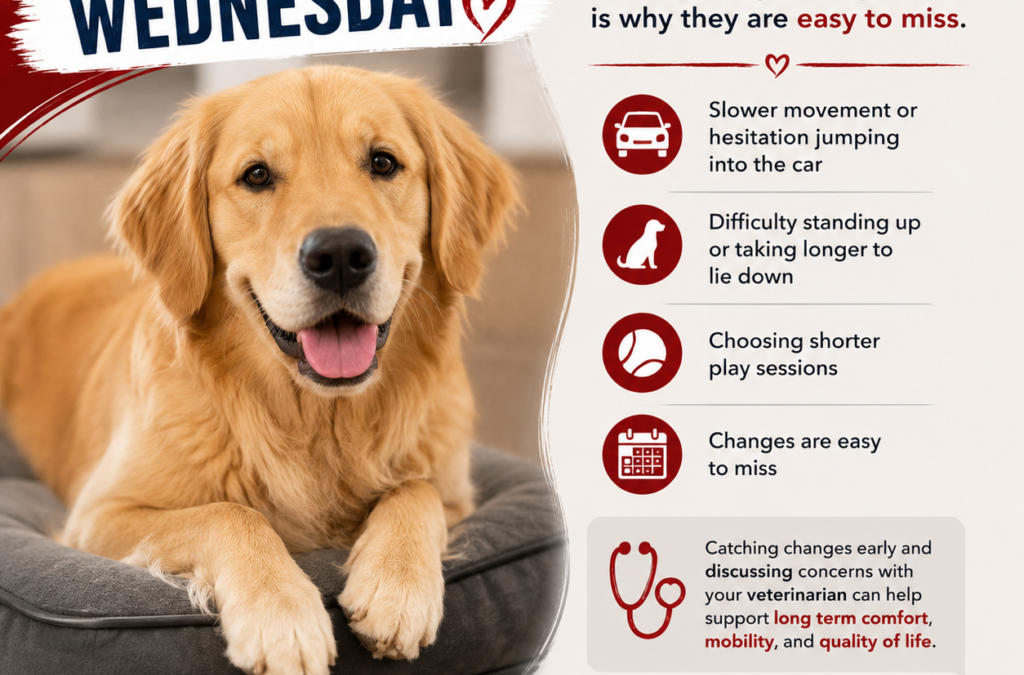
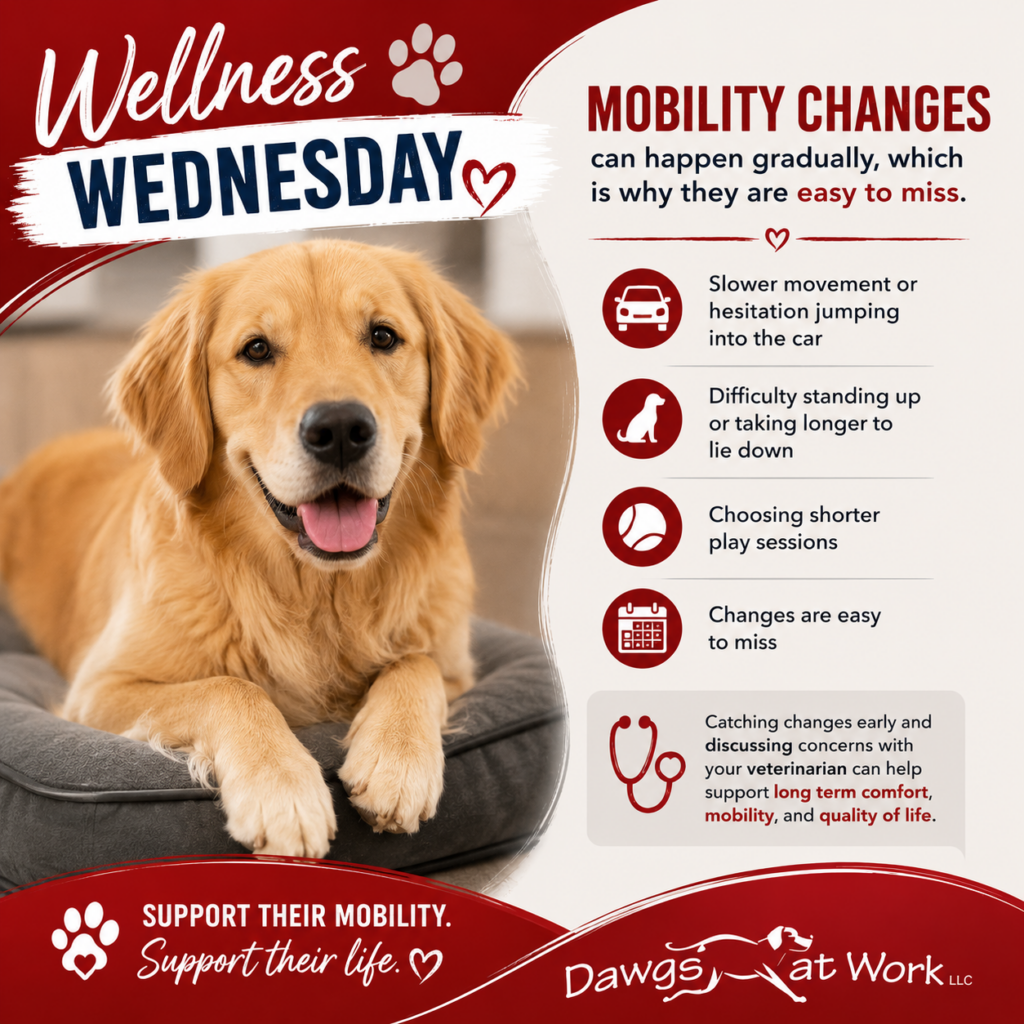
Mobility changes can happen gradually, which is why they are easy to miss. Slower movement, hesitation jumping into the car, difficulty standing up, taking longer to lie down, or choosing shorter play sessions are sometimes brushed off as “just getting older.” While age can play a role, subtle changes may also signal discomfort or underlying issues worth paying attention to. Catching changes early and discussing concerns with your veterinarian can help support long term comfort, mobility, and quality of life.
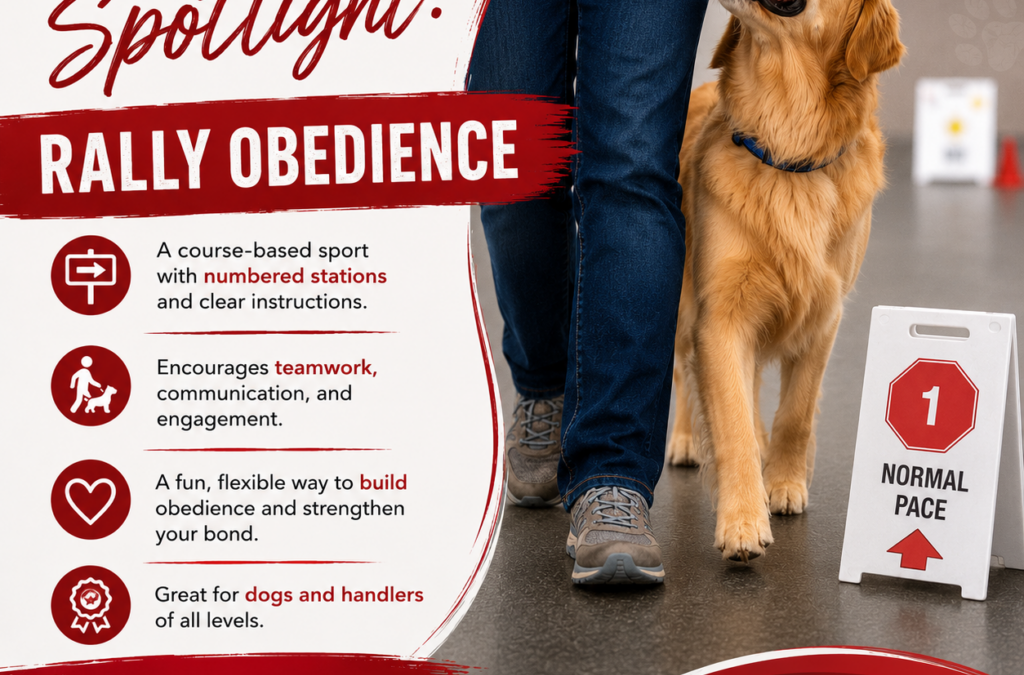
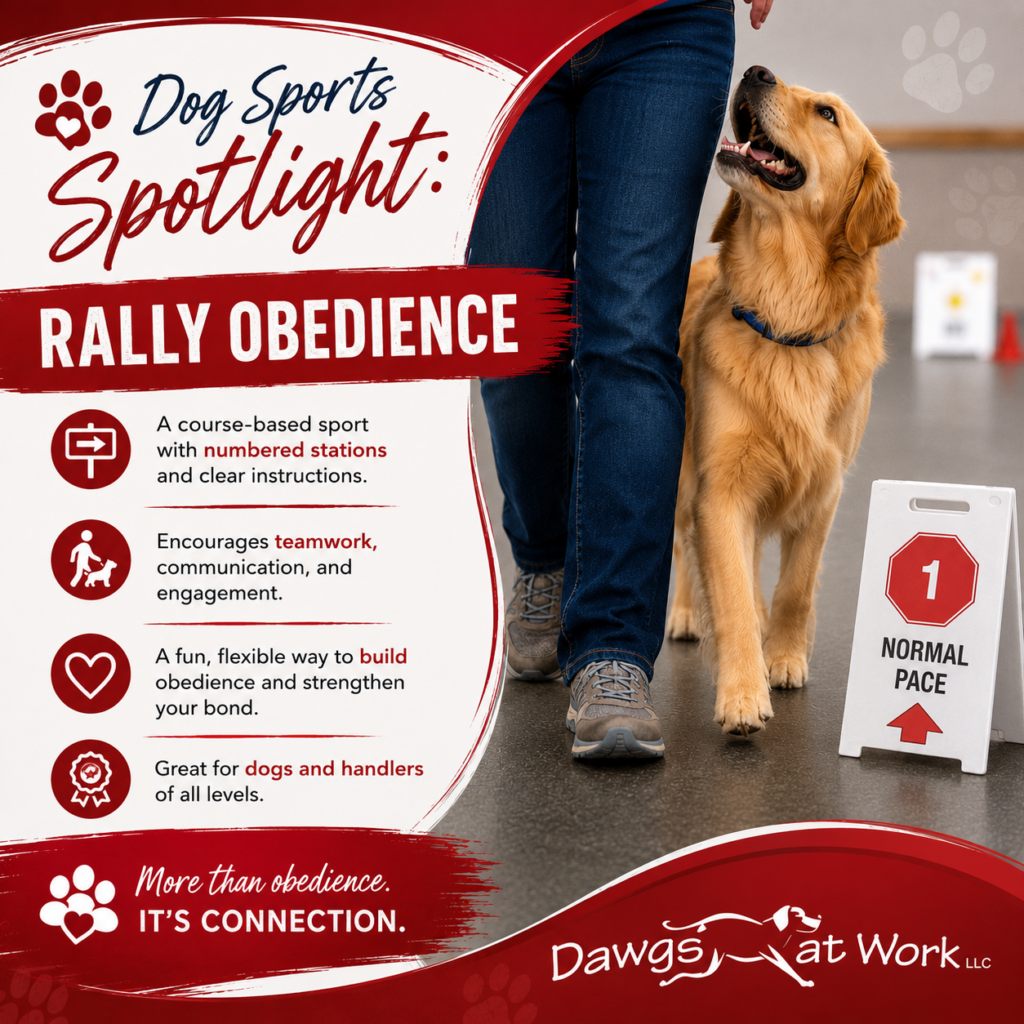
Another accessible and highly engaging dog sport is Rally Obedience, often called Rally-O. Rally combines elements of traditional obedience with a more fluid, course-based format. Handlers and dogs move through a series of stations marked by signs, each indicating a specific behavior or exercise such as sits, turns, changes of pace, or position changes. The team completes the course together, focusing on communication and teamwork rather than rigid precision.
What makes Rally Obedience unique is its balance of structure and flexibility. It allows for handler communication throughout the course, creating a more conversational style of working with your dog while still reinforcing focus, responsiveness, and control. Rally is an excellent entry point for dogs and handlers who want to build obedience skills in a more dynamic and less formal setting while still strengthening real world reliability. At Dawgs at Work, we love Rally because it keeps training engaging while still reinforcing clarity, connection, and teamwork.