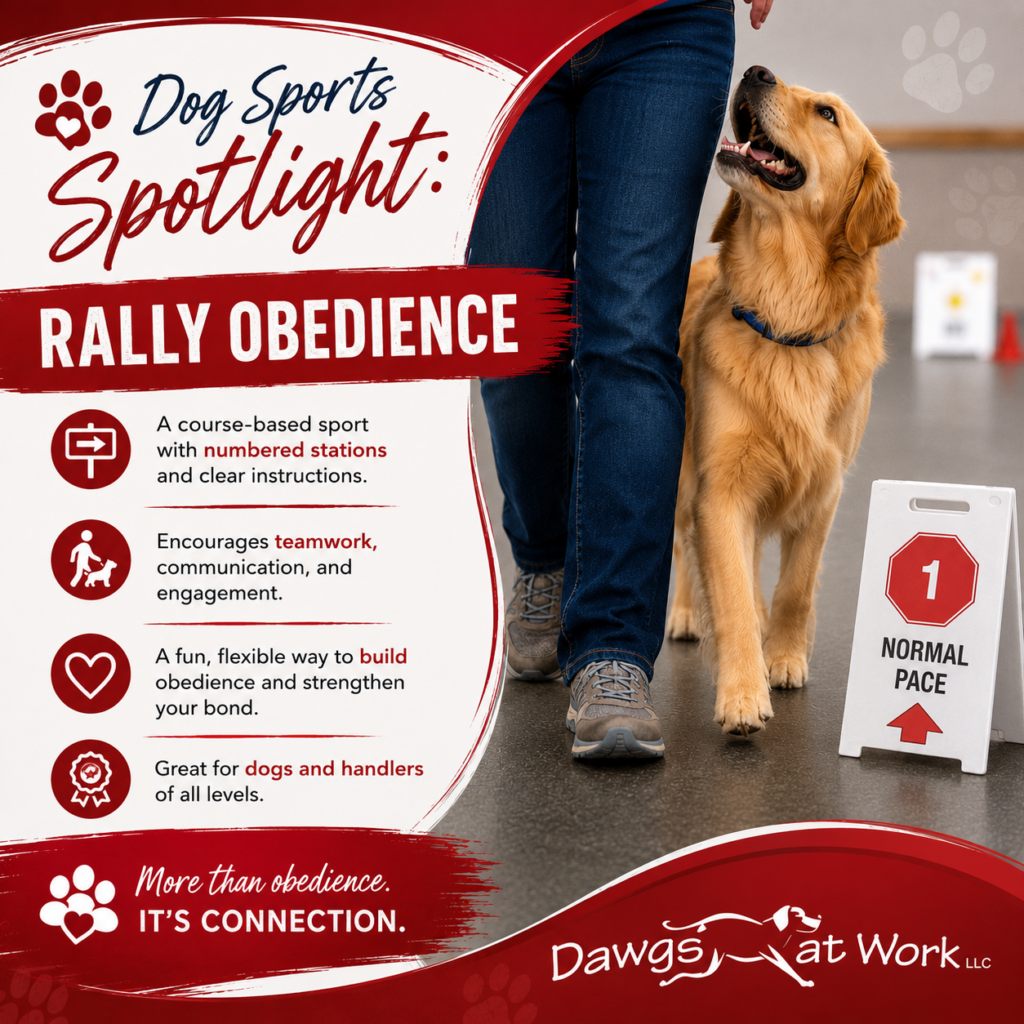
Dog Sports Spotlight: Rally Obedience
Another accessible and highly engaging dog sport is Rally Obedience, often called Rally-O. Rally combines elements of traditional obedience with a more fluid, course-based format. Handlers and dogs move through a series of stations marked by signs, each indicating a specific behavior or exercise such as sits, turns, changes of pace, or position changes. The team completes the course together, focusing on communication and teamwork rather than rigid precision.
What makes Rally Obedience unique is its balance of structure and flexibility. It allows for handler communication throughout the course, creating a more conversational style of working with your dog while still reinforcing focus, responsiveness, and control. Rally is an excellent entry point for dogs and handlers who want to build obedience skills in a more dynamic and less formal setting while still strengthening real world reliability. At Dawgs at Work, we love Rally because it keeps training engaging while still reinforcing clarity, connection, and teamwork.
Daily Dog
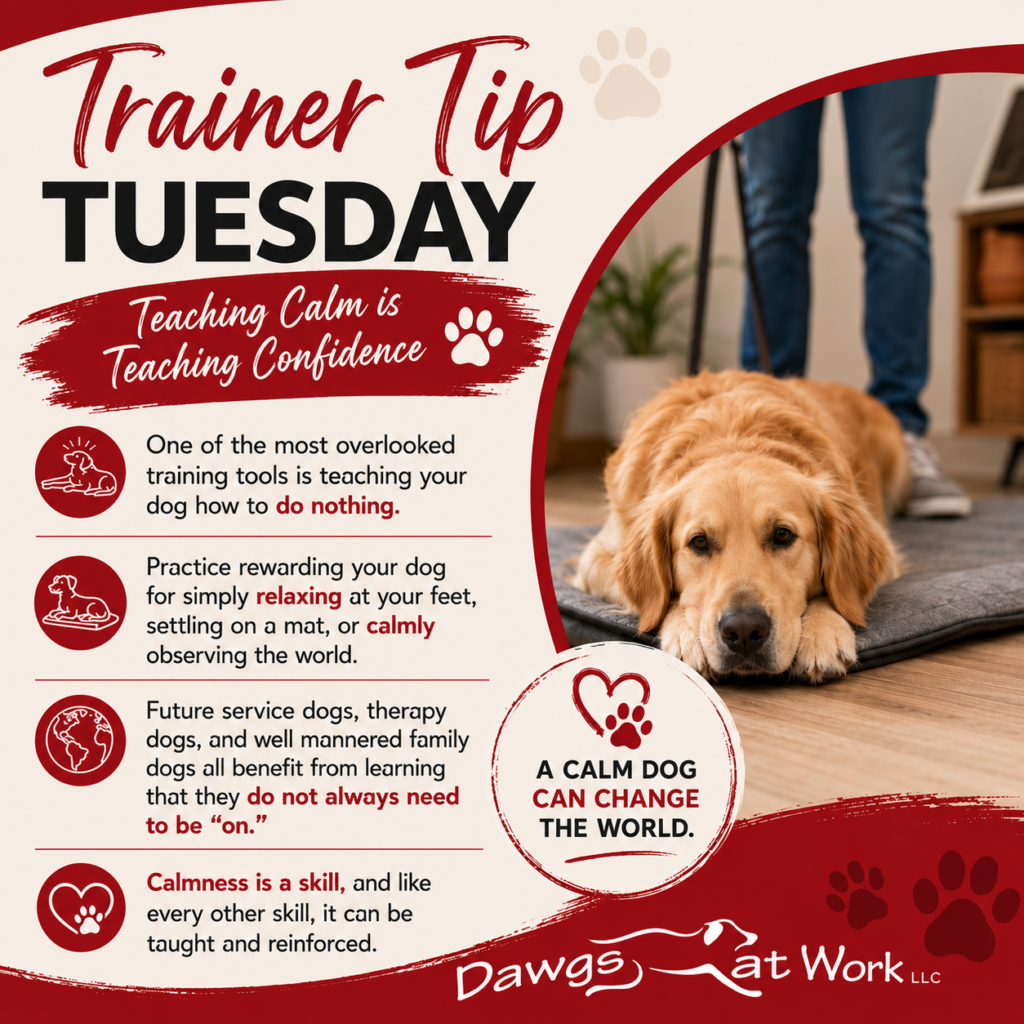
Honey is growing into something truly special. At just 10 months old, Honey is hard at work preparing for her future as a therapy dog with the therapy dog ministry at Holy Cross Church. Every outing, training session, and new experience helps build the confidence, calmness, and reliability she’ll need as she begins serving the children and staff in their school. Soon, Honey will be there to offer comfort during difficult days, celebrate happy moments, encourage young readers, and provide a quiet, calming presence whenever it’s needed most.
Therapy dogs do so much more than make people smile. They help create connections, reduce stress, and remind us that sometimes the best support doesn’t require words. We’re so proud of Honey and can’t wait to watch the incredible impact she’ll make in her community.
🐾 Is your church, school, or organization interested in adding a professionally trained therapy dog to your team? We’d love to help you build a program that’s tailored to your community’s needs. Reach out to Dawgs at Work to learn more about our therapy dog placement and training programs.
Trainer Tip Tuesday
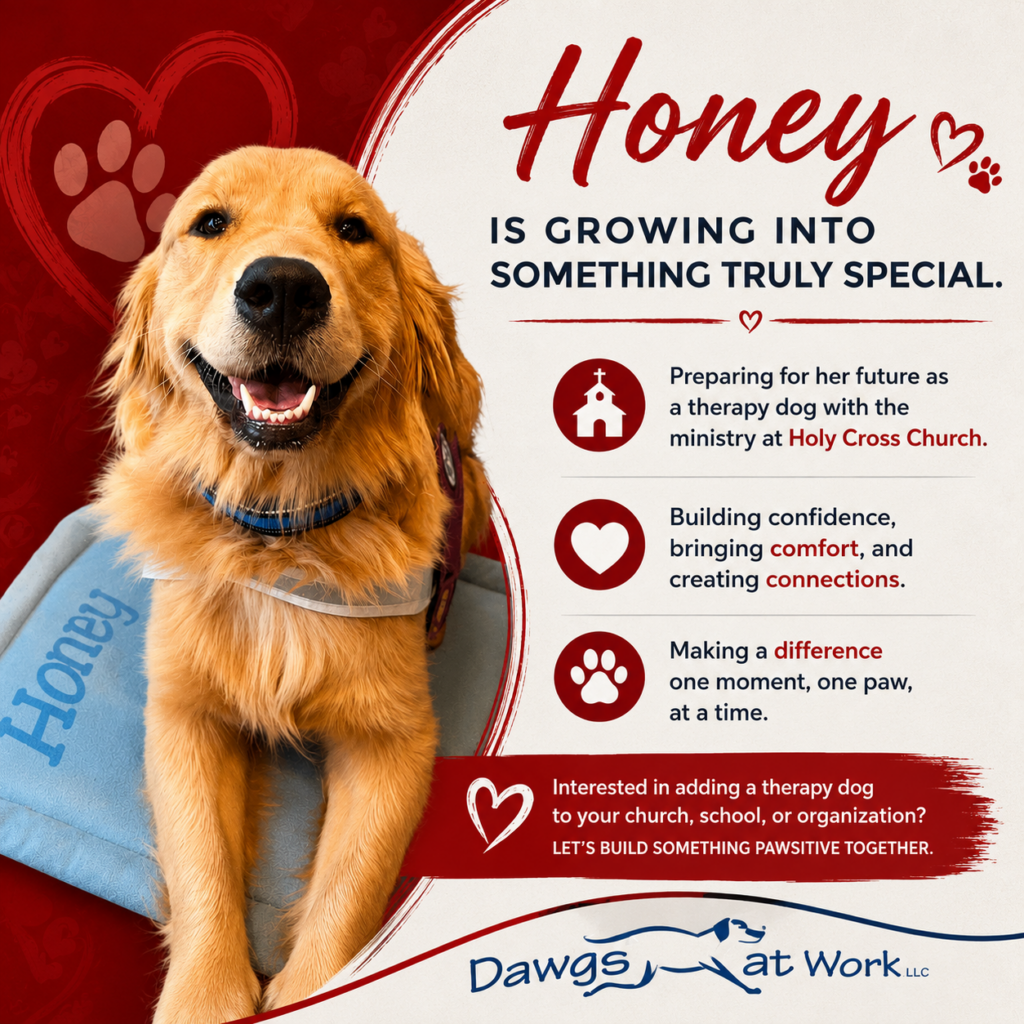
One of the most overlooked training tools is teaching your dog how to do nothing. We spend so much time teaching sits, downs, recalls, and tricks that we sometimes forget to teach calmness. Practice rewarding your dog for simply relaxing at your feet, settling on a mat, or calmly observing the world without needing to interact with everything around them. Future service dogs, therapy dogs, and well mannered family dogs all benefit from learning that they do not always need to be “on.” Calmness is a skill, and like every other skill, it can be taught and reinforced.
CGC Series: Star Puppy
Test Item #3
The next step in the Star Puppy evaluation is where the owner describes their exercise plan for the puppy. This part of the evaluation is about understanding how the puppy’s physical and mental needs will be met on a consistent basis.
Evaluators are looking for a realistic plan that includes appropriate daily exercise, mental enrichment, and structured activity that supports healthy development for that specific puppy and breed. This is not about having a perfect routine, but about showing awareness of the puppy’s needs and how the owner plans to meet them in everyday life. Exercise, enrichment, and structure all play a key role in preventing behavioral issues and building a well balanced dog.
At Dawgs at Work, we help families create practical, sustainable plans that fit their lifestyle while still supporting the dog’s long term wellbeing and training success. Next week we’ll continue with the next Star Puppy test item.

Daily Dog
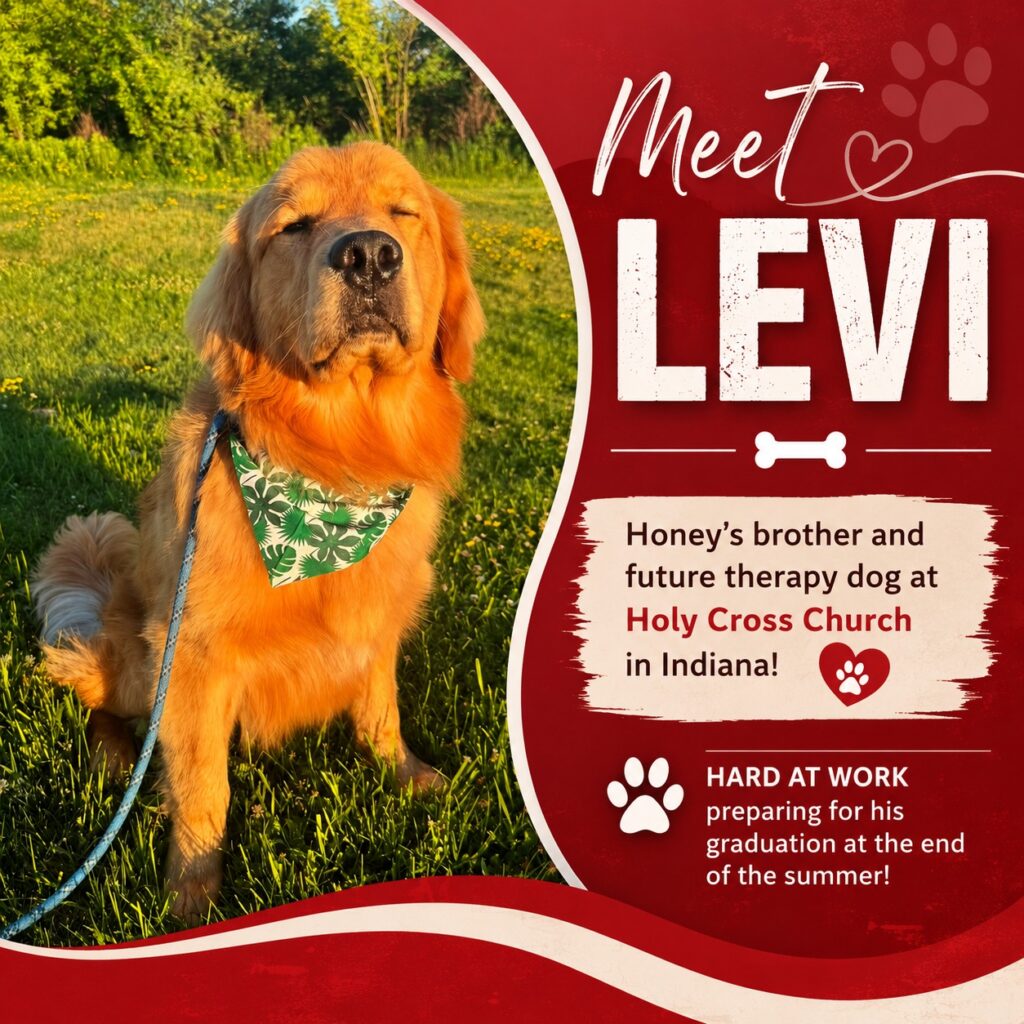
Meet Levi!
Levi is Honey’s brother and is working hard as he prepares for an exciting future serving the Holy Cross Church community in Indiana through their Dog Ministry. Every day, Levi is building the skills he’ll need to confidently support others through meaningful interactions, calm companionship, and the unwavering connection that therapy dogs provide. From practicing obedience and public manners to strengthening his confidence in new environments, each training session brings him one step closer to graduation.
We’re incredibly proud of the progress Levi has made and can’t wait to celebrate his graduation at the end of the summer. His future is bright, and we know he’ll make a lasting impact on everyone he meets at Holy Cross Church. Way to go, Levi! We can’t wait to watch you continue to grow. 
If you are interested in adding a Ministry dog to your church please reach out to us at dawgsatwork@propetware.com, we would love to connect!
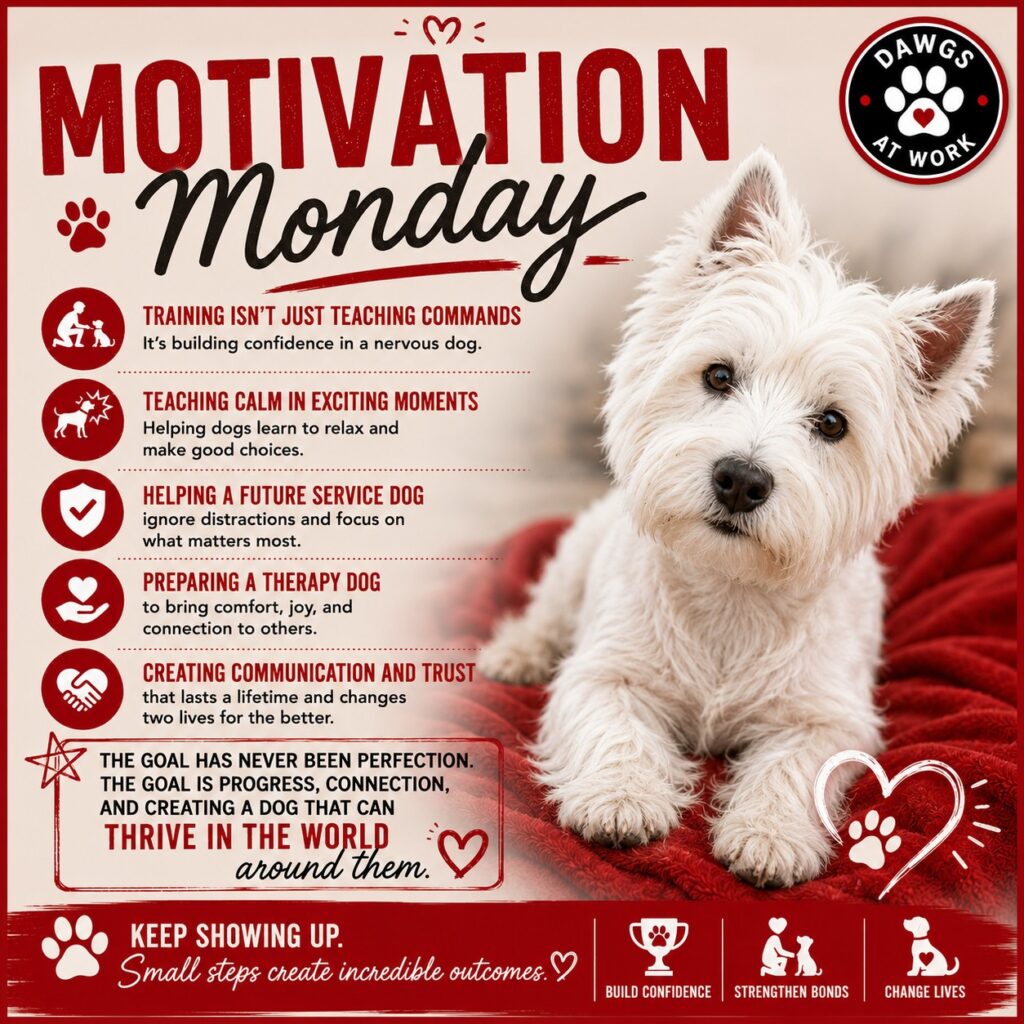
Motivation Monday
Training isn’t just teaching commands It’s building confidence in a nervous dog. Teaching calm in exciting moments. Helping a future service dog ignore distractions. Preparing a therapy dog to bring comfort. Creating communication and trust that lasts a lifetime. The goal has never been perfection. The goal is progress, connection, and creating a dog that can thrive in the world around them. Keep showing up. Small steps create incredible outcomes.
Body Language Breakdown (Weekly Series)
This week we’re focusing on the eyes. A dog’s eyes can tell you a lot about their internal state if you know what to look for. Soft eyes with a relaxed brow often indicate a calm and comfortable dog.
Direct, hard staring can signal intensity, arousal, or a dog that is assessing a situation more seriously. “Whale eye,” where you can see the whites of the eyes, is often a sign that a dog is feeling pressure, discomfort, or is trying to create space from something in their environment. Blink rate, squinting, and whether the eyes appear round or soft can also give additional context.
Like all body language, eyes should never be read alone, but as part of the full picture including ears, mouth, and body posture. Next week we’ll continue the series with another important part of canine communication.