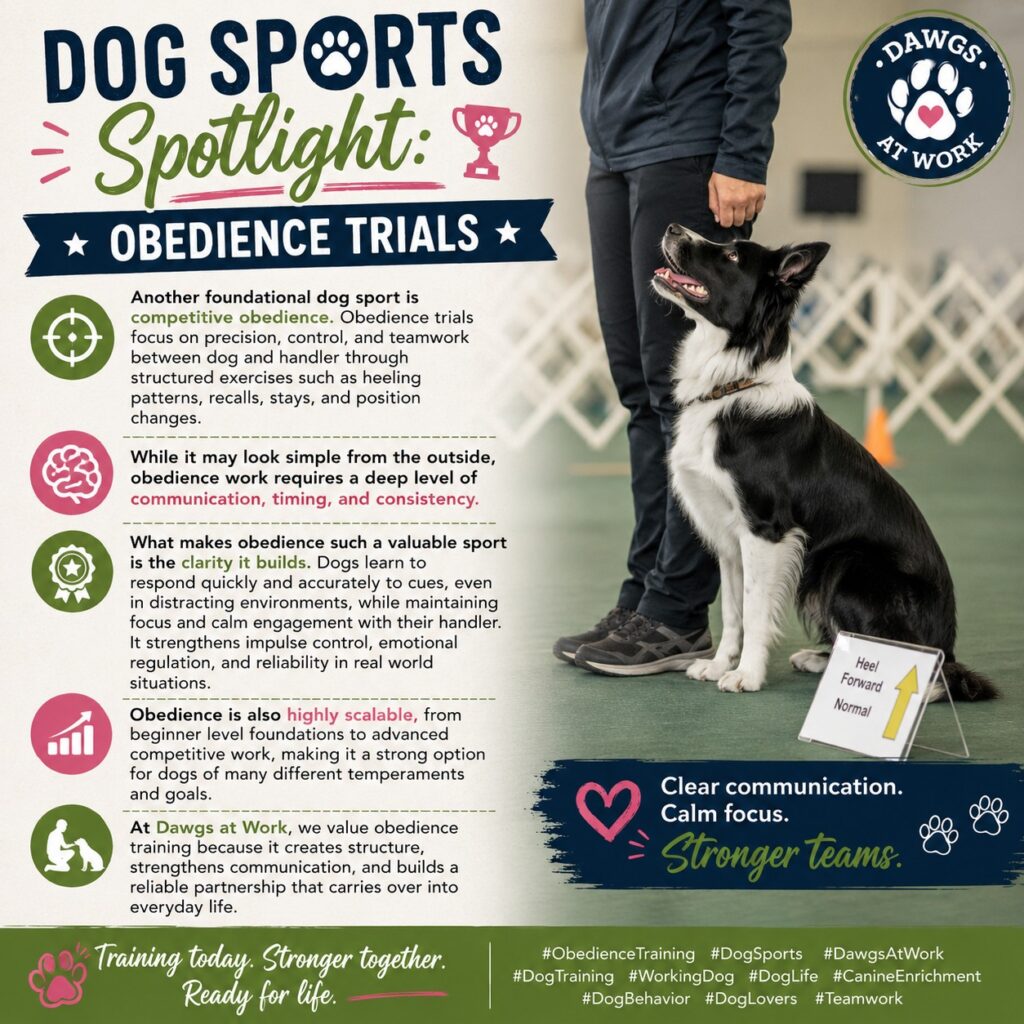
Dog Sports Spotlight: Obedience Trials
Another foundational dog sport is competitive obedience. Obedience trials focus on precision, control, and teamwork between dog and handler through structured exercises such as heeling patterns, recalls, stays, and position changes. While it may look simple from the outside, obedience work requires a deep level of communication, timing, and consistency. What makes obedience such a valuable sport is the clarity it builds.
Dogs learn to respond quickly and accurately to cues, even in distracting environments, while maintaining focus and calm engagement with their handler. It strengthens impulse control, emotional regulation, and reliability in real world situations. Obedience is also highly scalable, from beginner level foundations to advanced competitive work, making it a strong option for dogs of many different temperaments and goals. At Dawgs at Work, we value obedience training because it creates structure, strengthens communication, and builds a reliable partnership that carries over into everyday life.
Daily Dog
Meet Chito
Chito is an 11-month-old Portuguese Water Dog enrolled in our Stepping Out Therapy Dog Program, and he has been making a splash ever since joining the Dawgs at Work family! Thoughtfully sourced from Aguas De Seda Portuguese Water Dogs through our trusted partner, Doggit, Chito brings together everything we look for in a future therapy dog: intelligence, enthusiasm, adaptability, and a genuine love for people.
Bright and eager to learn, Chito approaches each new challenge with curiosity and confidence. Whether he’s exploring new environments, practicing therapy dog skills, or meeting new friends, he is always ready to jump in with a wagging tail and a positive attitude. But beyond his training potential, what truly makes Chito special is his heart. He has a fun-loving personality, a joyful spirit, and an endless supply of affection to share with everyone he meets. His combination of enthusiasm and connection makes him a wonderful candidate for therapy work as he continues progressing through the program.
We are excited to watch Chito continue to grow, learn, and develop into the incredible therapy dog we know he can become. Stay tuned as Chito continues his journey through our Stepping Out Therapy Dog Program!

Trainer Tip Tuesday
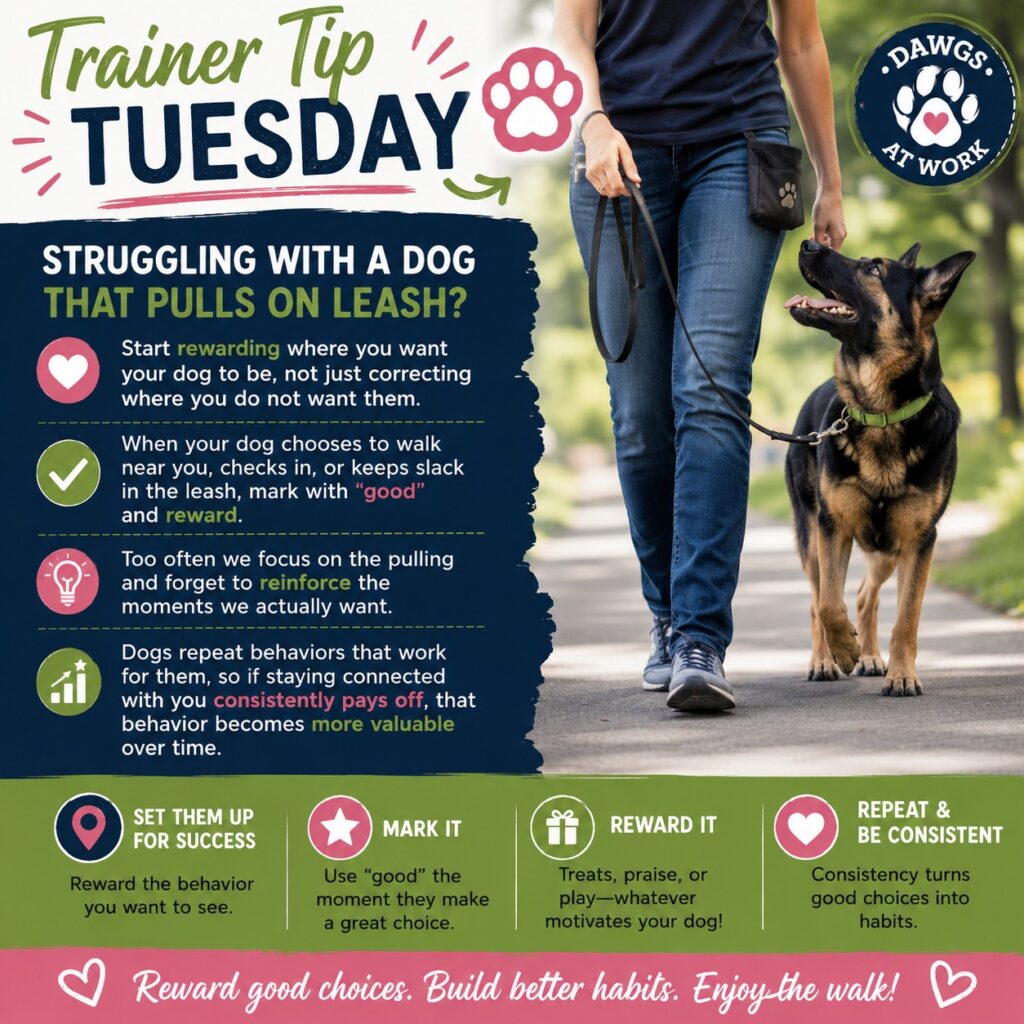
Struggling with a dog that pulls on leash? Start rewarding where you want your dog to be, not just correcting where you do not want them. When your dog chooses to walk near you, checks in, or keeps slack in the leash, mark with “good” and reward. Too often we focus on the pulling and forget to reinforce the moments we actually want. Dogs repeat behaviors that work for them, so if staying connected with you consistently pays off, that behavior becomes more valuable over time.
CGC Series: Star Puppy
CGC Series: Star Puppy — Test Item #2
The next step in the Star Puppy evaluation focuses on whether the puppy appears healthy and active for their breed. This is a simple but important observation of the puppy’s overall physical condition, energy level, and general wellbeing. Evaluators are looking for a puppy that moves comfortably, engages appropriately with their environment, and shows normal curiosity and activity levels consistent with their age and breed expectations.
It is not about perfection or performance, but about ensuring the puppy is physically thriving and able to participate in early learning experiences. Breed differences are always taken into account, as energy levels, structure, and natural drive can vary widely between dogs. At Dawgs at Work, we emphasize that a healthy foundation is essential for successful training, confidence building, and long term development. Next week we’ll continue with the next Star Puppy test item.

Daily Dog
Meet Klaus
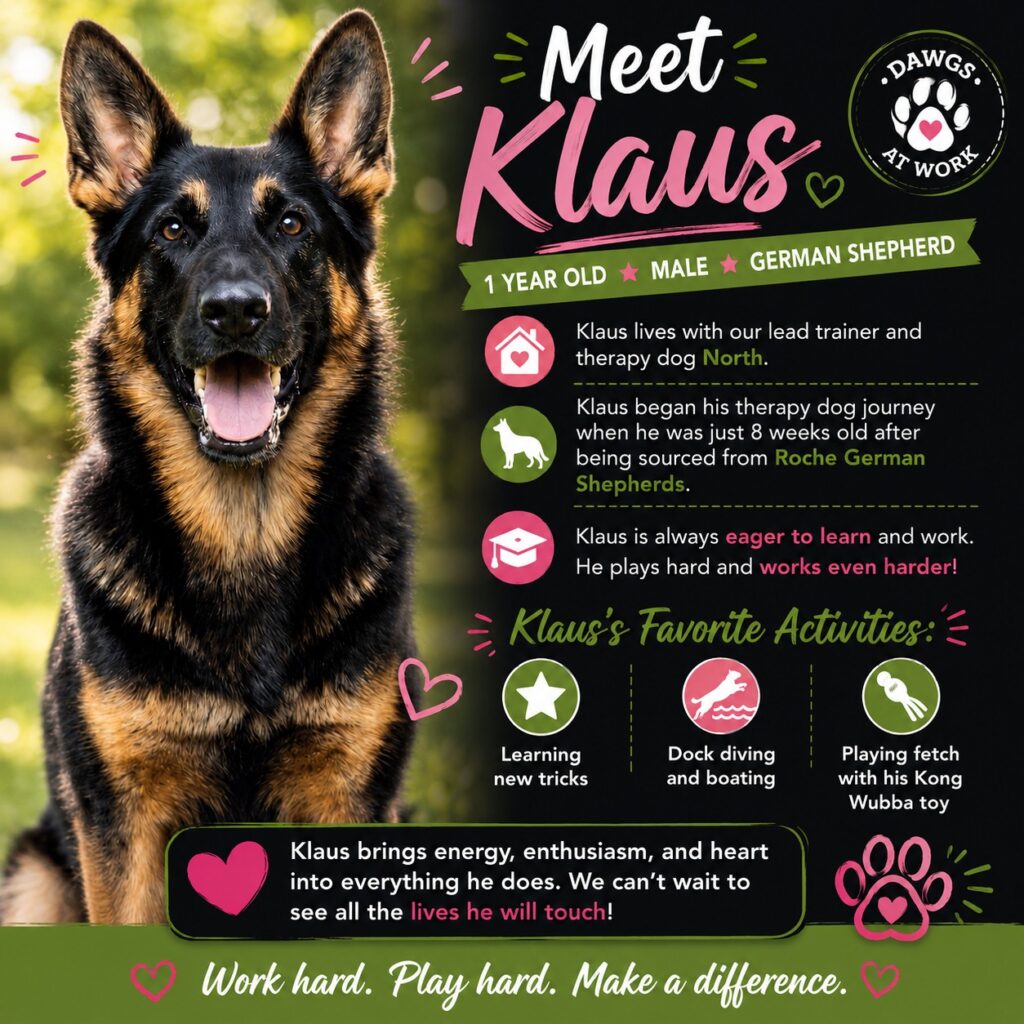
Klaus is a 1-year-old German Shepherd and one of the rising stars in our therapy dog program! Klaus began his journey with Dawgs at Work when he was just 8 weeks old after being carefully sourced from Roche’s German Shepherds. Since day one, he has shown an incredible enthusiasm for learning and a strong desire to work alongside his people. At home, Klaus lives with our lead trainer and fellow therapy dog North, who has helped mentor him as he grows into his role. Whether he’s learning new skills, practicing for visits, or exploring new environments, Klaus approaches every challenge with confidence, curiosity, and determination.
While Klaus takes his work seriously, he knows how to have fun too! His favorite activities include learning new tricks, dock diving, spending time out on the boat, and convincing anyone nearby to throw his beloved Kong Wubba toy for just one more game of fetch. Klaus truly embodies the saying, “Work hard, play hard.” He brings energy, enthusiasm, and heart into everything he does, and we are excited to watch his therapy dog career continue to grow. We can’t wait to see all the lives Klaus will touch as he continues his journey.
Motivation Monday
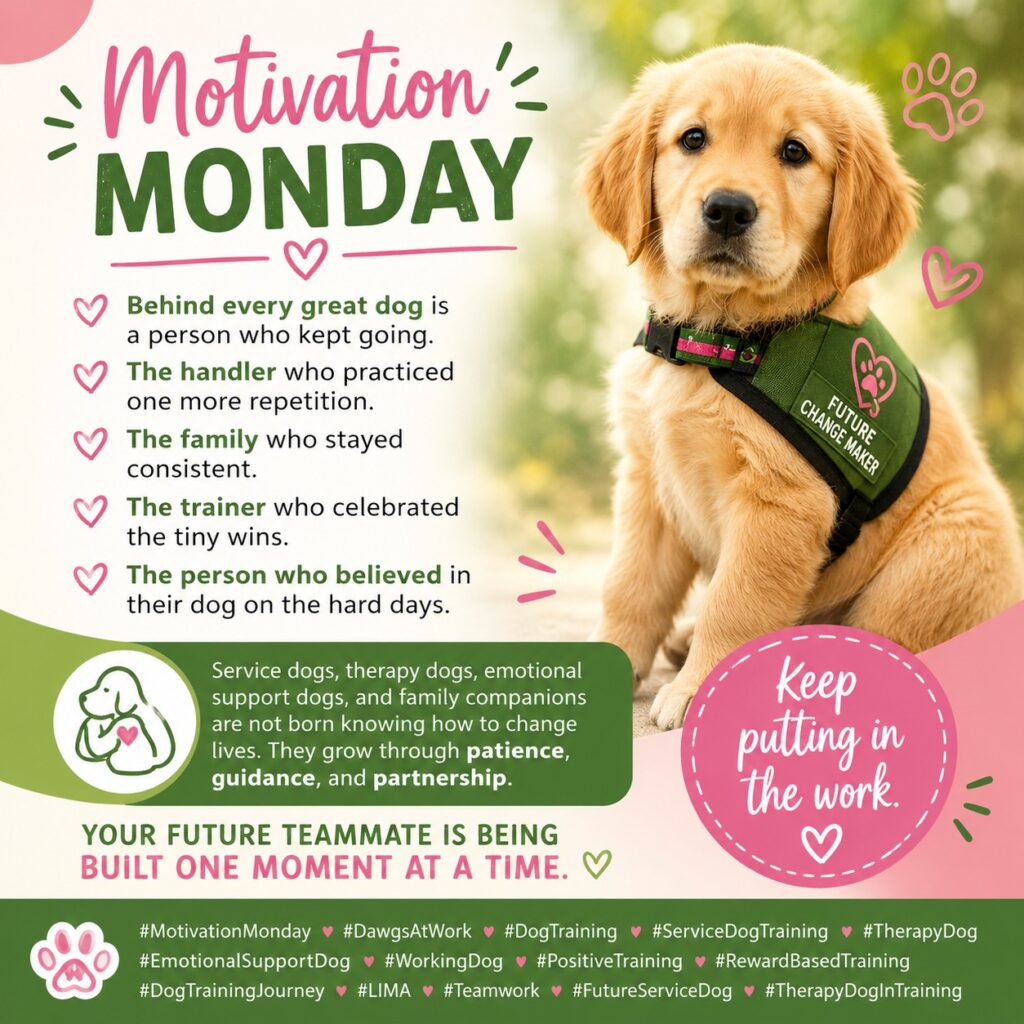
Behind every great dog is a person who kept going. The handler who practiced one more repetition. The family who stayed consistent. The trainer who celebrated the tiny wins. The person who believed in their dog on the hard days. Service dogs, therapy dogs, emotional support dogs, and family companions are not born knowing how to change lives. They grow through patience, guidance, and partnership. Keep putting in the work. Your future teammate is being built one moment at a time.
Body Language Breakdown
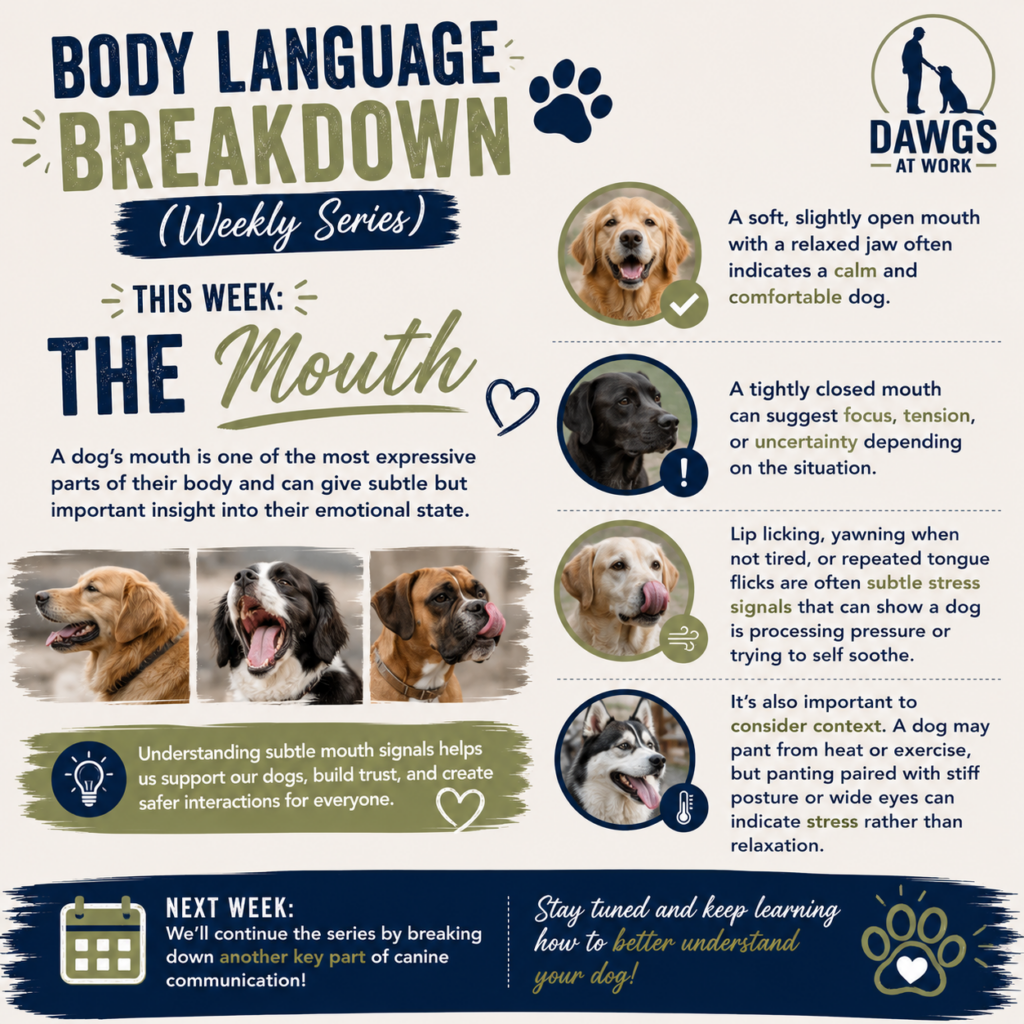
(Weekly Series) This week we’re focusing on the mouth. A dog’s mouth is one of the most expressive parts of their body and can give subtle but important insight into their emotional state. A soft, slightly open mouth with a relaxed jaw often indicates a calm and comfortable dog. A tightly closed mouth can suggest focus, tension, or uncertainty depending on the situation.
Lip licking, yawning when not tired, or repeated tongue flicks are often subtle stress signals that can show a dog is processing pressure or trying to self soothe. It’s also important to consider context. A dog may pant from heat or exercise, but panting paired with stiff posture or wide eyes can indicate stress rather than relaxation. Next week we’ll continue the series by breaking down another key part of canine communication.